
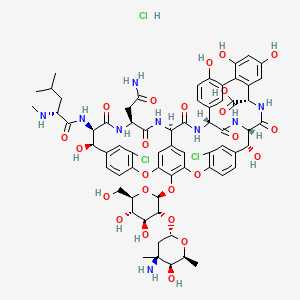
CAS · 1404-93-9
Product Overview
Vancomycin hydrochloride丨1404-93-9 is an antibiotic used primarily to treat serious bacterial infections, especially those caused by Gram-positive bacteria, including methicillin-resistant Staphylococcus aureus (MRSA). It is a glycopeptide antibiotic that interferes with bacterial cell wall synthesis, making it an essential therapeutic agent in combating resistant infections.
Product Specifications
| Property | Specification |
|---|---|
| Grade | USP |
| Appearance | White, almost white, or tan to brown powder |
| Identification | Infrared Absorption, complies |
| Clarity of solution | Clear |
| Assay (microbial) (anhydrous basis) | NLT 900 µg/mg |
| Heavy metals | NMT 30 ppm |
| Limit of monodechlorovancomycin | NMT 4.7% |
| pH | 2.5 - 4.5 |
| Water | NMT 5.0% |
| Composition of Vancomycin | 1) Vancomycin B: NLT 85.0% 2) Any peak other than the main peak: NMT 5.0% |
| Sterility | Sterility |
| Bacterial endotoxins | NMT 0.33 EU/mg of vancomycin |
Applications
Detailed application notes for this product are available on request. Contact our technical team for the full application dossier, formulation guidance and regulatory documentation.
Benefits
✅ Effective Against Resistant Infections
Vancomycin is one of the few antibiotics effective against multi-drug resistant organisms, including MRSA and vancomycin-resistant enterococci (VRE).
✅ Broad-Spectrum Activity
Targets a wide range of Gram-positive bacteria, including Staphylococcus aureus, Streptococcus pneumoniae, and Enterococcus species.
✅ Used in Critical Care
Vital in the treatment of life-threatening infections, especially in hospital-acquired infections.
✅ Alternative to Beta-Lactam Antibiotics
Often used in patients who have allergic reactions to penicillin or other beta-lactam antibiotics.
Conclusion
Vancomycin hydrochloride丨1404-93-9 is a critical antibiotic in modern medicine, particularly for treating resistant bacterial infections such as MRSA and C. difficile. Its broad-spectrum activity, effectiveness in critical care, and role in preventing infections make it an essential tool in combating serious, life-threatening infections.
Previous
Mafenide Acetate丨CAS 13009-99-9
Next