CAS · 84625-61-6
Product Overview
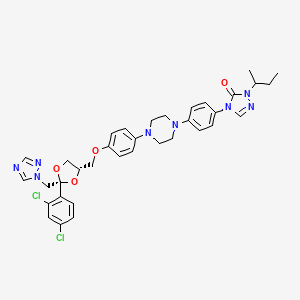
Itraconazole is a high-purity a-api supplied for industrial and specialty chemical applications. Contact our team for specifications, packaging options and lead times.
Product Specifications
| Grade: | Enterprise standard |
|---|---|
| Appearance: | White to off-white powder, odorless |
| Assay: | 98.5% min |
| Identification: | Conforms |
| Solution: | Conforms |
| Residual solvents: | Conforms |
| Specific Rotation: | -0.10° to +0.10° |
| Melting range: | 165–169℃ |
| Loss on drying: | 0.5% max |
| Residue on ignition: | 0.1% max |
| Heavy metals: | 20 ppm max |
| Total impurities: | 1.25% max |
| Single impurity: | 0.5% max |
Applications
1. Pharmaceutical Industry – Antifungal Agent
Itraconazole is primarily used as a systemic antifungal drug for treating a wide range of fungal infections:
Dermatophytoses (e.g., tinea corporis, tinea pedis, tinea unguium)
Candidiasis (oral, esophageal, and systemic)
Aspergillosis (invasive and chronic pulmonary)
Histoplasmosis, blastomycosis, and sporotrichosis
Fungal nail infections (onychomycosis)
It is used both in oral capsule/tablet and oral solution forms. The solution has better bioavailability and is used for more serious infections.
2. Prophylactic Use in Immunocompromised Patients
Administered to HIV/AIDS patients, organ transplant recipients, or chemotherapy patients to prevent opportunistic fungal infections.
Helps reduce morbidity from systemic mycoses in immunosuppressed individuals.
3. Research Applications
Studied in oncology for its antiangiogenic and hedgehog pathway inhibitory properties.
Investigated for drug repurposing in non-fungal diseases like certain cancers and chronic inflammatory conditions.
Benefits
1. Broad-Spectrum Antifungal Activity
Itraconazole has excellent activity against both:
Yeasts (e.g., Candida species)
Molds (e.g., Aspergillus, Histoplasma, Blastomyces)
Its action targets the fungal cytochrome P450-dependent enzyme lanosterol 14α-demethylase, inhibiting ergosterol synthesis, which is vital for fungal cell membrane integrity.
2. High Tissue Penetration
Accumulates well in keratin-rich tissues like nails and skin, making it especially effective for dermatophyte and nail infections.
Long half-life supports short-course or pulse dosing regimens.
3. Oral Availability and Tolerability
Can be administered orally in capsule or solution form.
Solution form shows higher and more consistent absorption, especially under fasting conditions.
4. Safe for Long-Term Use (with Monitoring)
Compared to older antifungals (e.g., ketoconazole), itraconazole is generally safer and better tolerated for long-term use.
Requires liver function monitoring but has fewer serious side effects than amphotericin B.
Conclusion
Itraconazole (CAS 84625-61-6) is a potent triazole antifungal agent used in treating both superficial and systemic mycoses. Its broad-spectrum efficacy, good tissue penetration, and oral bioavailability make it a valuable drug in infectious disease therapy. Beyond antifungal uses, it is gaining attention for potential anticancer and anti-inflammatory applications, showcasing its versatility.
Previous
Oestradiol 17-heptanoate丨CAS 4956-37-0
Next