
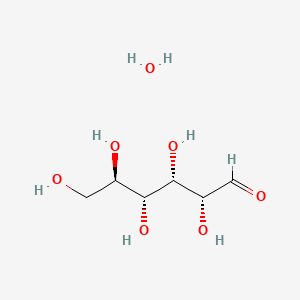
CAS · 5996-10-1
Product Overview
D-Glucose monohydrate is a high-purity sugar-units supplied for industrial and specialty chemical applications. Contact our team for specifications, packaging options and lead times.
Product Specifications
| Grade: | Food Grade/FCC12 |
|---|---|
| Appearance: | White, crystalline granules or as a granular powder |
| Assay (Reducing Sugar): | 99.5% – 100.5% |
| Arsenic: | 1 mg/kg max |
| Chlorides: | 0.018% max |
| Lead: | 0.1 mg/kg max |
| Sulfur Dioxide: | 0.002% max |
| Loss on Drying: | 10.0% max |
| Optical (Specific) Rotation: | +52.6~+53.2° |
| Residue on Ignition: | 0.1% max |
| Starch: | A yellow color indicates the absence of soluble starch |
| Identification: | A copious red precipitate of cuprous oxide forms |
| Description: | It is purified and crystallized D-glucose. It contains one molecule of water of crystallization. It is freely soluble in water, very soluble in boiling water, and slightly soluble in alcohol. |
Applications
1. Food and Beverage Industry
D-Glucose monohydrate丨CAS 5996-10-1 is extensively used as a sweetener, texturizer, and fermentation substrate:
● Enhances flavor and shelf-life in bakery products, soft drinks, and confectioneries
● Provides readily available energy in sports drinks and infant formulas
● Acts as a starting carbohydrate in the production of alcohols and acids via fermentation
2. Pharmaceutical Industry
In pharmaceuticals, D-glucose monohydrate is utilized as:
● An energy supplement in intravenous (IV) infusions
● A tablet binder and filler in oral medications
● A stabilizer in formulations, including vaccines and biologicals
3. Medical and Clinical Nutrition
Used in clinical nutrition and rehydration therapy:
● Maintains blood sugar levels in hypoglycemic patients
● Supplies calories and hydration during surgery or recovery
● Commonly included in total parenteral nutrition (TPN)
4. Biotechnology and Microbiology
D-glucose monohydrate serves as a carbon source in microbial culture media:
● Supports the growth of bacteria, yeast, and cell cultures
● Essential in biotechnological fermentation processes (e.g., for antibiotics, enzymes)
5. Industrial and Chemical Uses
Used in non-food applications such as:
● Fermentation feedstock for bioethanol and citric acid production
● Chelating agent precursor for use in water treatment
● Ingredient in biodegradable polymer synthesis
Benefits
✅ Highly Soluble and Digestible
Provides immediate energy and is easily metabolized in both humans and microorganisms.
✅ Safe and Biocompatible
Non-toxic and widely accepted for use in food and medical applications.
✅ Versatile Functionality
Acts as a sweetener, bulking agent, stabilizer, and fermentation substrate, enhancing both formulation and performance.
✅ Sustainable and Renewable
Derived from natural sources such as starch, making it environmentally friendly for industrial use.
Previous
Next
Conclusion
A concise summary and suitability assessment for this product is available on request. Contact our team to discuss whether it fits your process and quality requirements.