
CAS · 14431-43-7
Product Overview
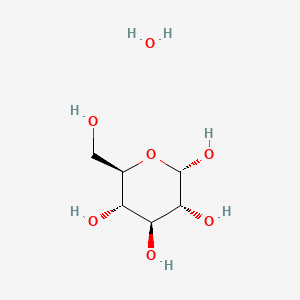
D-(+)-Glucose monohydrate is a high-purity food-additives supplied for industrial and specialty chemical applications. Contact our team for specifications, packaging options and lead times.
Product Specifications
| Grade | FCC12 |
|---|---|
| Appearance | White, crystalline granules or a granular powder. Purified and crystallized D-glucose containing one molecule of water of crystallization. Freely soluble in water, very soluble in boiling water, slightly soluble in alcohol. |
| Assay (Reducing Sugar Content) | 99.5% - 100.5% |
| Identification | A copious red precipitate of cuprous oxide forms |
| Arsenic | 1 mg/kg max |
| Chloride | 0.018% max |
| Lead | 0.1 mg/kg max |
| Sulfur Dioxide | 0.002% max |
| Loss on Drying | 10.0% max |
| Optical (Specific) Rotation | +52.6° - +53.2° |
| Residue on Ignition (Sulfated Ash) | 0.1% max |
| Starch | A yellow color indicates the absence of soluble starch |
Applications
D-(+)-Glucose monohydrate is widely used in the food, pharmaceutical, and biotechnology industries. In the food sector, it serves as a sweetener, energy source, and fermentation substrate for producing products such as bread, beverages, and confections. In pharmaceuticals, it is used in intravenous solutions to provide energy, maintain blood sugar levels, and as an excipient in tablets and syrups. In biotechnology and research, D-(+)-Glucose monohydrate functions as a carbon source in microbial fermentation, cell culture media, and enzymatic studies. It is also applied in analytical chemistry as a standard for sugar assays and calibration.
Benefits
The benefits of D-(+)-Glucose monohydrate include its high solubility, stability, and bioavailability, making it an efficient energy source for both humans and microorganisms. It supports rapid metabolic processes, enhances microbial growth in fermentation, and maintains physiological functions in clinical applications. Its purity and monohydrate form ensure consistent performance in analytical, pharmaceutical, and industrial processes. Additionally, as a natural and biocompatible compound, it is safe for consumption and widely accepted in food and medical formulations.
Conclusion
D-(+)-Glucose monohydrate is an essential compound with broad applications in food, pharmaceuticals, biotechnology, and research. Its solubility, stability, and bioavailability make it a reliable energy source and functional ingredient. By supporting fermentation, metabolism, and clinical nutrition, D-(+)-Glucose monohydrate continues to be a critical compound in industrial, medical, and research settings.
Previous
Next