
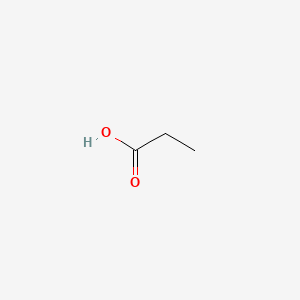
CAS · 79-09-4
Product Overview
Propionic acid is a high-purity food-additives supplied for industrial and specialty chemical applications. Contact our team for specifications, packaging options and lead times.
Product Specifications
| Appearance: | Colorless to light yellow oil liquid |
|---|---|
| Assay: | 99.5% min |
| Odor: | Slight pungent odor |
| Density (20℃): | 0.993–0.997 g/cm³ |
| Boiling point: | 138.5–142.5℃ |
| Aldehyde (propionaldehyde): | 0.05% max |
| Moisture: | 0.15% max |
| Evaporation residue: | 0.01% max |
| Oxide (formic acid): | 0.05% max |
| Heavy metal (Pb): | 2.0 mg/kg max |
| As: | 3.0 mg/kg max |
Applications
1. Food and Feed Preservation
Propionic acid and its salts (mainly calcium and sodium propionate) are extensively used as preservatives in:
Bakery products (bread, cakes, pastries) to inhibit mold and bacterial growth.
Cheese and other dairy products to prolong shelf life.
Animal feed (especially poultry and cattle) to prevent mold contamination and nutrient loss.
Regulatory approvals:
Propionic acid is approved by regulatory bodies like the FDA (USA), EFSA (Europe), and China's GB standards as a food-grade preservative.
2. Agriculture and Animal Husbandry
Silage preservation: Propionic acid is added to silage to prevent spoilage caused by molds and yeasts, improving the nutritional quality of feed.
Grain storage: Helps protect harvested grains (corn, wheat, etc.) during storage from microbial degradation.
Animal health: Acts as a growth promoter and gut stabilizer in ruminants by regulating pH levels and controlling pathogenic bacteria.
3. Pharmaceutical and Healthcare Industry
Used as an intermediate in the synthesis of pharmaceutical compounds such as:
Non-steroidal anti-inflammatory drugs (NSAIDs) (e.g., ibuprofen, naproxen)
Antifungal agents
Anesthetics
It is also studied for antimicrobial properties that can be applied to topical treatments and disinfectants.
4. Chemical and Industrial Manufacturing
Serves as a building block in organic synthesis for:
Cellulose acetate propionate (CAP) – used in coatings, films, and plastics.
Plasticizers and herbicides
Solvents and intermediate chemicals (e.g., esters, alcohols)
Used as a pH control agent in industrial processes.
5. Textile and Leather Industry
Used in textile dyeing and finishing to adjust pH and improve dye penetration.
In the leather tanning process, it helps control microbial growth during curing and storage.
6. Cosmetic and Personal Care Products
Used in formulations of creams, lotions, and ointments for its antimicrobial effect and pH regulation.
Sometimes included in fragrances and flavoring agents, although its pungent odor limits its use.
Benefits
1. Excellent Antifungal and Antibacterial Properties
Propionic acid inhibits the growth of molds and certain bacteria, making it highly effective in food preservation and feed hygiene.
This contributes to longer shelf life, reduced spoilage, and improved food safety.
2. Improves Feed Efficiency and Animal Performance
By preventing mold in feed, it helps retain nutrient content, promoting better digestion and animal weight gain.
It reduces the need for antibiotics in livestock, supporting antibiotic-free farming initiatives.
3. Cost-Effective and Versatile
Propionic acid is relatively low-cost compared to other preservatives.
It has a wide range of applications across different sectors, providing economic efficiency in supply chains.
4. Environmental and Regulatory Compliance
As a biodegradable and naturally occurring acid, it aligns with environmental standards and sustainable practices.
Widely approved for use in food and feed, ensuring regulatory ease in global trade.
5. Industrial Utility
Its role as a chemical intermediate makes it essential for the production of value-added chemicals and materials.
Offers good miscibility with water and organic solvents, enhancing its usability in formulations.
6. Shelf-life Extension Without Compromising Quality
In bakery and dairy products, it does not alter the flavor or texture significantly, preserving consumer experience while ensuring microbial safety.
Conclusion
Propionic acid (CAS 79-09-4) is a valuable chemical with multifaceted applications in food safety, agriculture, pharmaceuticals, cosmetics, and chemical synthesis. Its strong antimicrobial properties, cost efficiency, and compatibility with regulatory frameworks make it a crucial component in both commercial and industrial products. Whether it's extending the shelf life of bread, enhancing the digestibility of animal feed, or serving as a precursor in pharmaceuticals, propionic acid plays a vital role in modern science and industry.
Previous
Next