
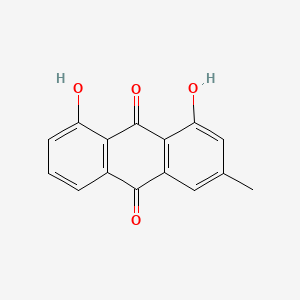
CAS · 481-74-3
Product Overview
Chrysophanic acid is a high-purity plant-extracts-natural-products supplied for industrial and specialty chemical applications. Contact our team for specifications, packaging options and lead times.
Product Specifications
| Appearance | Fine Powder |
|---|---|
| Assay | 98% min |
| Colour | Orange |
| Odour | Characteristic |
| Taste | Characteristic |
| Loss on drying | 2.0% max |
| Ash | 1.0% max |
| Heavy metals | 10 ppm max |
| Lead | 2 ppm max |
| Arsenic | 1 ppm max |
| Mercury | 0.5 ppm max |
| Cadmium | 1 ppm max |
| Microbiological Test Total Plate count | 1000 cfu/g max |
| Yeast & Mold | 100 cfu/g max |
| E.Coli | Negative |
| Salmonella | Negative |
| Staphylococcus | Negative |
Applications
Chrysophanic acid is widely used in pharmaceutical, cosmetic, and research applications. In medicine, it is employed for its anti-inflammatory, antibacterial, and antifungal properties, particularly in topical treatments for skin conditions such as eczema, psoriasis, and fungal infections. The compound also serves as a bioactive ingredient in traditional medicine formulations and is studied for potential anticancer, hepatoprotective, and antioxidant effects. In the cosmetic industry, chrysophanic acid is used in formulations targeting pigmentation, skin brightening, and acne management due to its regulatory effect on melanogenesis and antimicrobial activity. Additionally, it is applied in biochemical research as a reference compound or standard in studies of natural anthraquinone derivatives and their biological activities.
Benefits
Chrysophanic acid offers multiple benefits stemming from its natural anthraquinone structure and bioactivity. It exhibits potent anti-inflammatory and antimicrobial effects, making it effective in treating skin disorders and reducing microbial contamination. Its antioxidant properties help protect cells from oxidative stress, supporting both therapeutic and cosmetic applications. The compound is chemically stable under formulation conditions, compatible with various topical bases, and allows targeted delivery when incorporated into creams or gels. Furthermore, its dual role as both a bioactive agent and a chemical intermediate enables its use in the development of novel pharmaceuticals and functional cosmetic products.
Conclusion
Chrysophanic acid (CAS 481-74-3) is a valuable natural anthraquinone with diverse applications in medicine, cosmetics, and research. Its anti-inflammatory, antimicrobial, and antioxidant properties, combined with chemical stability and versatility, make it an important bioactive compound and functional ingredient. It supports the development of effective therapeutic formulations, skincare products, and bioactive chemical studies.
Previous
Next