CAS · 39537-23-0
Product Overview
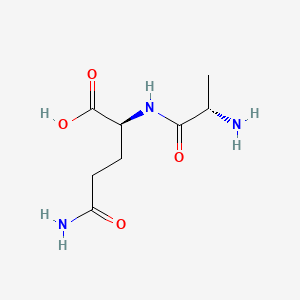
Alanyl-glutamine丨39537-23-0 is a dipeptide composed of the amino acids glutamine and alanine, linked by a peptide bond. It is a modified amino acid that combines the benefits of both glutamine and alanine, two important amino acids involved in various biological processes and metabolism.
Synthesis
Alanyl-glutamine丨39537-23-0 is synthesized through peptide synthesis, where the amino acids alanine and glutamine are covalently bonded via their carboxyl and amino groups. This process can be achieved using solid-phase or liquid-phase peptide synthesis techniques.
Synthesis Route
1.Activation of Amino Acids: Both glutamine and alanine are activated with suitable reagents (such as carbodiimides like EDC) to facilitate the formation of a peptide bond.
2.Coupling Reaction: The activated glutamine and alanine are then coupled under controlled conditions to form the dipeptide.
3.Purification: The product is purified using techniques such as HPLC (High Performance Liquid Chromatography) to obtain the pure dipeptide.
Product Specifications
| Property | Specification |
|---|---|
| Grade | CP 2015 |
| Appearance | White or white-like crystalline or crystalline powder; odorless, tasteless, insoluble in water and insoluble in ethanol, acetone, or ether |
| Specific rotation | +9.5° ~ +11.0° |
| Identification | Conforms |
| Acidity pH value | 5.0 ~ 6.0 |
| Clarification and color of the solution | Clear or shallow below the turbidity standard solution # 1. Colorless or less than yellow # 1 standard colorimetry. |
| Ring- (L-Alanyl-L-glutamine) | 0.1% max |
| L-pyroglutamyl-L-alanine | 0.15% max |
| L-pyroglutamic acid | 0.05% max |
| D-Alanyl-L-glutamine | 0.05% max |
| L-Alanyl-L-glutamate | 0.5% max |
| Ring- (L-Alanyl-L-Glul) | 0.04% max |
| Unknown single maximum impurity | 0.1% max |
| Unknown total impurities | 0.3% max |
| Chloride | 0.02% max |
| Sulfate | 0.02% max |
| Ammonium salt | 0.08% max |
| Loss on drying | 0.5% max |
| Residue on ignition | 0.1% max |
| Molysite | 0.001% max |
| Heavy metal | 10 ppm max |
| Bacterial endotoxin | 0.05 EU/mg max |
| Assay (As dried, the C8H15N3O4) | 98.5% min |
Applications
Detailed application notes for this product are available on request. Contact our technical team for the full application dossier, formulation guidance and regulatory documentation.
Benefits
1. Nutritional and Metabolic Benefits
Alanyl-glutamine丨39537-23-0 is used as a nutritional supplement and is considered to offer several benefits for health, particularly in athletes, individuals undergoing intense exercise, and those recovering from illness or injury.
● Glutamine Component: Glutamine plays a crucial role in protein synthesis, immune function, and gut health. It is a key precursor for the synthesis of other amino acids and nucleotides. It also serves as an important energy source for cells in the intestinal lining and immune system.
● Alanine Component: Alanine, on the other hand, plays a role in gluconeogenesis, where it is converted to glucose to provide energy during fasting or exercise. It also acts as a buffer in the blood to maintain acid-base balance.
2. Improved Exercise Recovery and Performance
Alanyl-glutamine丨39537-23-0 is commonly used by athletes and individuals involved in strenuous physical activities due to its potential benefits for muscle recovery and performance. The compound is believed to:
● Enhance muscle protein synthesis, aiding in muscle repair and growth following intense physical activity.
● Reduce muscle fatigue by supporting the body's ability to replenish glutamine stores after exercise. This helps in maintaining immune function and intestinal health during periods of intense training.
● Increase endurance by maintaining muscle hydration and reducing oxidative stress during prolonged exercise.
3. Gut Health
Glutamine is a vital fuel source for the intestinal cells, and alanyl-glutamine is sometimes used in gut health supplements to support those with digestive issues. The combination of glutamine and alanine may help in:
● Supporting intestinal barrier integrity, thus reducing the risk of leaky gut syndrome or intestinal permeability.
● Maintaining gut homeostasis and promoting the growth of beneficial gut flora.
4. Immune System Support
Glutamine is essential for the function of the immune system, particularly in the activity of white blood cells like lymphocytes and macrophages. By providing a stable source of glutamine in the body, alanyl-glutamine can:
● Support immune health, particularly in individuals with compromised immune function (e.g., during recovery from surgery, illness, or in critically ill patients).
● Enhance recovery by improving the resilience of the immune system following physical stress or metabolic stress (e.g., in athletes or those with trauma).
5. Clinical Applications
Alanyl-glutamine丨39537-23-0 has been explored in clinical settings, particularly for its potential benefits in patients with critical illness or those recovering from surgery. Some of the key areas of research include:
● Critical care nutrition: Alanyl-glutamine supplementation has been investigated for its ability to support patients with trauma, burns, or major surgery, where protein catabolism (muscle breakdown) is heightened.
● Cancer patients: Studies have explored whether alanyl-glutamine can help maintain nutritional status in cancer patients undergoing chemotherapy or radiation, as these treatments can lead to muscle wasting and immune suppression.
6. Potential Anti-aging Effects
Due to its role in promoting cell repair and supporting immune function, alanyl-glutamine may have potential benefits in anti-aging and age-related diseases. This is due to its ability to:
● Support cellular regeneration by providing essential building blocks for protein synthesis.
● Support immune system activity, reducing the likelihood of infections and promoting overall vitality.
Conclusion
Alanyl-glutamine丨39537-23-0 is a dipeptide that combines the benefits of glutamine and alanine, both essential amino acids involved in protein synthesis, immune health, and metabolism. It is commonly used as a supplement for exercise recovery, gut health, and immune support. In clinical settings, it has shown promise in critical care and cancer recovery. Although generally safe, it should be used cautiously by individuals with kidney issues or those on immunosuppressive therapy. With its broad range of applications, alanyl-glutamine continues to be an important tool in both nutrition and medicine.
Previous
Paromomycin Sulfate Salt丨CAS 1263-89-4
Next