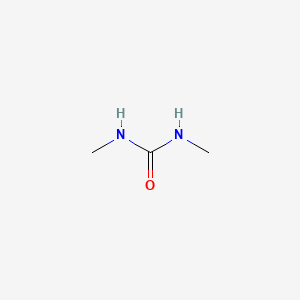
CAS · 96-31-1
Product Overview
1,3-Dimethylurea is a high-purity pharmaceutical-intermediates supplied for industrial and specialty chemical applications. Contact our team for specifications, packaging options and lead times.
Product Specifications
| Appearance | White to off-white flaky crystal |
|---|---|
| Purity (HPLC) | 97.5% min |
| Maximum Single Impurity | 1.0% max |
| Total Impurities | 2.5% max |
| Melting Point | 102~106℃ |
| Water | 0.5% max |
Applications
1. Intermediate in Chemical Synthesis
DMU is a valuable building block in organic chemistry. Its reactive amide functionality allows it to participate in various chemical transformations:
● Synthesis of herbicides and plant growth regulators
● Manufacture of pharmaceuticals such as theophylline derivatives and other substituted ureas
● Preparation of dyes and pigments, particularly for reactive dyes used in textiles
2. Agrochemical Applications
1,3-Dimethylurea serves as a key intermediate in the production of phenylurea herbicides, which are widely used in agriculture. Some of these include:
● Monuron, Diuron, and Linuron, used to control broadleaf and grassy weeds in crops such as cotton, sugarcane, and wheat
● Plant growth regulators: DMU can be part of formulations that modulate growth cycles in commercial agriculture and horticulture
These applications benefit from DMU's role in enabling low-toxicity, systemic, and persistent weed control.
3. Pharmaceutical Industry
DMU is used as a chemical precursor in synthesizing a variety of pharmaceutical compounds:
● Substituted xanthine derivatives (e.g., caffeine analogs)
● Urea-based drugs, including anti-inflammatory and antihypertensive agents
● Intermediate for antimetabolites, enzyme inhibitors, and CNS agents
Its presence facilitates the development of bioactive molecules due to its hydrogen bonding potential and urea moiety's pharmacophoric properties.
4. Polymer and Resin Manufacturing
1,3-Dimethylurea is used in:
● Melamine-formaldehyde and urea-formaldehyde resins, where it can act as a modifier to control curing time, hardness, and water resistance
● Plastic additives: Enhances thermal and mechanical properties of engineering plastics
● Coating formulations: Improves crosslinking and adhesion
It is valued for increasing durability, chemical resistance, and surface finish in high-performance resin systems.
5. Textile and Dye Industries
DMU is an intermediate in the manufacture of reactive dyes that chemically bond to textiles:
● Used in cold water-soluble dye formulations
● Enhances dye-fiber affinity, washfastness, and color retention
● Acts as a mild reducing agent and a stabilizer in dye baths
These features make it important in dyeing cotton, rayon, and blended fabrics.
6. Research and Laboratory Use
Due to its structural similarity to urea, 1,3-dimethylurea is used in:
● Structure–activity relationship (SAR) studies
● Protein denaturation or unfolding experiments (urea analogs)
● Model compound for hydrogen bonding and solubility investigations
Its symmetrical substitution helps in studying steric and electronic effects on biological activity.
Benefits
1. Versatility
1,3-Dimethylurea丨CAS 96-31-1 serves as a multi-functional intermediate suitable for:
● Agrochemicals
● Pharmaceuticals
● Polymers
● Dyes and coatings
Its compatibility with diverse synthesis pathways and industries enhances its demand.
2. Stability and Handling
● Thermally stable
● Non-volatile
● Relatively low toxicity
These properties make it easier and safer to handle in both laboratory and industrial settings.
3. Water Solubility
● Its good solubility in water facilitates reaction homogeneity in aqueous or semi-aqueous systems, particularly in agriculture and textiles.
4. Environmental Compatibility
● DMU-based herbicides (e.g., Diuron) are systemic, requiring lower application rates, and help reduce overall chemical load on ecosystems.
● When used as a dye intermediate or resin modifier, it contributes to longer-lasting performance, reducing waste and frequency of application.
Conclusion
A concise summary and suitability assessment for this product is available on request. Contact our team to discuss whether it fits your process and quality requirements.