8-Hydroxy-5-quinolinesulfonic acid monohydrate
CAS 283158-18-9
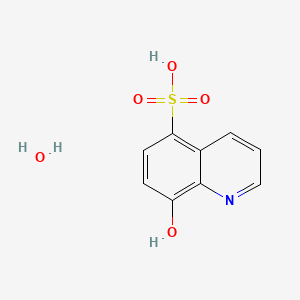
CAS · 283158-18-9
Product Overview
8-Hydroxy-5-quinolinesulfonic acid monohydrate is a high-purity pharmaceutical-intermediates supplied for industrial and specialty chemical applications. Contact our team for specifications, packaging options and lead times.
Product Specifications
| Item | Specification |
|---|---|
| Appearance | Light yellow needle crystal or powder |
| Purity | 98.0% min |
| Water | 2.0% max |
Applications
1. Metal Chelation and Coordination Chemistry
● Chelating Agent: This compound is a highly effective chelator for transition metals (e.g., Cu²⁺, Fe³⁺, Zn²⁺, Al³⁺, Pb²⁺).
● Ligand Design: 8-Hydroxy-5-quinolinesulfonic acid monohydrate丨CAS 283158-18-9 serves as a versatile ligand in coordination compounds for:
Catalysis research
Metal complex stability studies
Supramolecular chemistry
The sulfonic acid group increases hydrophilicity, enabling the formation of water-soluble metal complexes, valuable for aqueous-phase catalysis and bioinorganic modeling.
2. Analytical and Fluorescent Probes
● Fluorescent Indicator: Exhibits fluorescence upon metal ion binding, allowing for use in:
Fluorometric assays for trace metals
Real-time sensing of biologically relevant ions (e.g., zinc, copper)
● Spectrophotometric Reagent: Used in colorimetric assays to detect or quantify metal ions in water, biological fluids, or industrial samples.
Its selectivity and signal amplification make it useful in environmental monitoring, clinical diagnostics, and quality control in industrial processes.
3. Biological and Pharmaceutical Research
● Bioactivity Studies: Quinolines, especially hydroxyquinolines, are known for antibacterial, antifungal, antiviral, and antiparasitic properties. Sulfonated derivatives can exhibit:
Improved solubility and bioavailability
Enhanced metal ion targeting in biological systems
● Antioxidant Studies: Through metal ion chelation, this compound may reduce metal-catalyzed oxidative stress, offering potential applications in:
Neuroprotection
Aging research
Cancer prevention mechanisms
It may also serve as a scaffold for the synthesis of novel therapeutics, especially in metal-related pathologies like Alzheimer's or Wilson's disease.
4. Environmental and Water Testing
● Water Hardness and Contaminant Detection: Detects heavy metals (e.g., lead, mercury, cadmium) in water samples via fluorescence or colorimetric shift.
● Wastewater Monitoring: Used in labs or sensors to measure trace metal concentrations in effluents and industrial discharges.
Its water solubility and sensitivity make it suitable for portable sensor development and field diagnostics.
5. Material Science and Surface Chemistry
● Functional Coatings: Its ionic and chelating nature allows binding to metal oxide surfaces (e.g., TiO₂, ZnO), enabling:
Surface modification for photocatalysis
Metal ion detection films
● Dye-Sensitized Applications: Investigated for use in light-harvesting materials due to its fluorescent and coordination properties.
Benefits
√ High Metal Affinity
● Strong and selective chelation of various biologically and environmentally relevant metal ions.
● Useful in both solution chemistry and surface attachment applications.
√ Water Solubility
● The sulfonic acid group enhances solubility in aqueous systems, making it compatible with biological assays and environmental samples.
√ Fluorescence Modulation
● Exhibits metal-induced fluorescence changes, enabling sensitive and selective fluorescent sensing.
√ Biocompatibility Potential
● Modified quinoline structure with known bioactive backbone, making it a candidate for further pharmaceutical development.
√ Stability and Shelf-Life
● As a crystalline monohydrate, it offers excellent stability under normal storage conditions, allowing for consistent laboratory use.
Conclusion
8-Hydroxy-5-quinolinesulfonic acid monohydrate丨CAS 283158-18-9 is a versatile, water-soluble chelating agent ideal for metal sensing, bioinorganic studies, and analytical chemistry. Its unique combination of fluorescent properties, coordination ability, and hydrophilic functionality opens doors in sensor technology, environmental testing, biological research, and pharmaceutical development.
Previous
1,3-Dibromopropane丨CAS 109-64-8
Next
Conclusion
A concise summary and suitability assessment for this product is available on request. Contact our team to discuss whether it fits your process and quality requirements.