CAS · 111-16-0
Product Overview
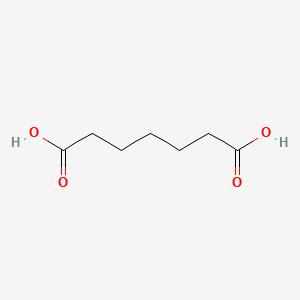
Pimelic acid is a high-purity pharmaceutical-intermediates supplied for industrial and specialty chemical applications. Contact our team for specifications, packaging options and lead times.
Product Specifications
| Appearance: | White crystalline powder |
|---|---|
| Purity: | 99.0% min |
| MP: | 103~105 °C |
| Volatility (110 °C, 2h): | 0.4% max |
| Water: | 0.5% max |
Applications
1. Intermediate in Organic Synthesis
Pimelic acid丨CAS 111-16-0 is a valuable intermediate in organic and polymer synthesis, especially due to its dicarboxylic nature and straight-chain structure.
● Precursor to Nylon and Polyamides:
Pimelic acid can be used in the synthesis of polyamides, particularly nylon-type materials. It reacts with diamines (like hexamethylenediamine) to form nylon-7,7, a variant with good mechanical and chemical properties.
● Used in Ring-Closing Reactions:
The seven-carbon chain of pimelic acid is optimal for certain macrocyclic ring-forming reactions, especially in the synthesis of lactones, macrocyclic ethers, and heterocycles.
● Building Block for Biochemicals:
It is often used to synthesize biologically active molecules such as coenzyme precursors, vitamin derivatives, and specialty fine chemicals.
2. Pharmaceutical Applications
● Precursor to Biotin (Vitamin B7):
Pimelic acid serves as a biosynthetic precursor for biotin, a critical B-complex vitamin involved in metabolism. In pharmaceutical manufacturing and research, pimelic acid is used as a raw material or intermediate in biotin synthesis.
● Prodrug Development:
Its dicarboxylic acid functionality makes pimelic acid a useful modifying agent in creating prodrugs with improved solubility and bioavailability.
● Linker Molecule in Drug Conjugates:
Pimelic acid can act as a spacer or linker in the synthesis of drug-delivery systems, where it bridges between the drug and the carrier system.
3. Polymer Industry
● Polyester and Alkyd Resin Production:
Pimelic acid丨CAS 111-16-0 reacts with polyols (like glycerol or ethylene glycol) to form polyesters and alkyd resins, which are used in coatings, paints, and adhesives.
● Biodegradable Polymer Synthesis:
As a dicarboxylic acid, it supports the formation of biodegradable polymers, contributing to the development of environmentally friendly plastics and biomedical materials.
4. Coordination Chemistry and Material Science
● Ligand in Metal Complexes:
Pimelic acid's two terminal carboxyl groups allow it to chelate metal ions, making it useful in coordination chemistry, including catalysis, sensors, and metal-organic frameworks (MOFs).
● Used in Crystallography Studies:
Due to its symmetrical nature and flexibility, pimelic acid is employed in crystal engineering and host–guest chemistry, often as a model molecule.
5. Research and Biochemical Studies
● Model Compound for Dicarboxylic Acids:
Pimelic acid is used in laboratory research as a model compound to study reaction mechanisms, enzyme activities, and metabolic pathways involving aliphatic dicarboxylic acids.
● Enzyme Substrate and Inhibitor Testing:
It is also utilized in biochemical research for developing enzyme inhibitors, particularly enzymes that interact with carboxylic acids such as decarboxylases and dehydrogenases.
Benefits
1. Versatile Synthetic Intermediate
● Pimelic acid's balanced carbon chain (C7) and two carboxylic groups make it highly adaptable in the production of a wide range of materials, from nylon variants to specialty polymers and pharmaceuticals.
2. Environmentally Friendly Applications
● When used in the synthesis of biodegradable polymers, Pimelic acid丨CAS 111-16-0 contributes to sustainable materials that reduce environmental impact, particularly in packaging and medical devices.
3. Biochemical Compatibility
● Its natural occurrence in metabolic pathways (e.g., in lysine degradation and biotin biosynthesis) makes pimelic acid biocompatible, facilitating its integration into pharmaceutical and biological research.
4. High Stability and Reactivity
● Pimelic acid is chemically stable under standard conditions and readily undergoes esterification, amidation, and polymerization reactions, making it reliable and efficient in large-scale production settings.
5. Cost-Effective and Readily Available
● Commercial production of pimelic acid is straightforward, making it a cost-effective choice for industries requiring bulk synthesis of polyamides, plasticizers, and coatings.
Conclusion
Pimelic acid丨CAS 111-16-0 is a versatile aliphatic dicarboxylic acid widely used as a building block in organic synthesis, polymer science, and pharmaceutical production. Its utility in producing nylon-like polymers, biotin precursors, resins, and biodegradable materials underscores its industrial and research significance. With its combination of reactivity, stability, biocompatibility, and economic viability, pimelic acid continues to be a key chemical across multiple scientific and commercial fields.
Previous
(S)-(-)-2-Methyl-2-propanesulfinamide丨CAS 343338-28-3
Next
Conclusion
A concise summary and suitability assessment for this product is available on request. Contact our team to discuss whether it fits your process and quality requirements.