
5-Bromo-4-chloro-3-indolyl phosphate p-toluidine salt
CAS 6578-06-9
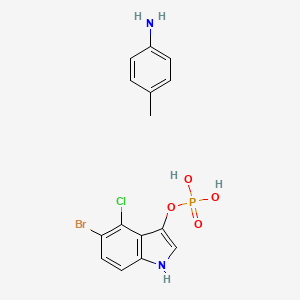
CAS · 6578-06-9
Product Overview
5-Bromo-4-chloro-3-indolyl phosphate p-toluidine salt is a high-purity biochemical-reagents supplied for industrial and specialty chemical applications. Contact our team for specifications, packaging options and lead times.
Product Specifications
| Appearance | White to light yellow powder |
|---|---|
| Assay | 98% min |
Applications
5-Bromo-4-chloro-3-indolyl phosphate p-toluidine salt is widely used as a chromogenic substrate in biochemical, clinical, and molecular biology applications. It is primarily employed for the detection and visualization of alkaline phosphatase activity in immunohistochemistry, enzyme-linked assays, and blotting techniques. Upon enzymatic hydrolysis, the compound produces an insoluble colored precipitate, enabling precise localization of enzyme activity in tissues, membranes, and gels. It is commonly applied in diagnostic kits, laboratory research, and assay development for studying protein expression, enzyme kinetics, and biomolecular interactions. Additionally, the compound is used in quality control and validation of enzymatic assays in research and industrial laboratories.
Benefits
This compound offers several advantages due to its high sensitivity and clear chromogenic response. The formation of an intense, stable colored precipitate allows for accurate and easily interpretable results, even at low enzyme concentrations. Its compatibility with standard alkaline phosphatase detection systems ensures reliable performance across a wide range of experimental conditions. The p-toluidine salt form improves handling, solubility, and consistency in assay preparation. Furthermore, the compound provides low background interference, high specificity, and reproducibility, making it suitable for both routine diagnostics and advanced research applications.
Conclusion
5-Bromo-4-chloro-3-indolyl phosphate p-toluidine salt is a valuable chromogenic reagent for detecting alkaline phosphatase activity in biochemical and diagnostic applications. Its use in enzyme visualization and assay development, combined with benefits such as high sensitivity, strong color contrast, and reliable performance, makes it an essential tool in molecular biology, clinical diagnostics, and laboratory research. The compound continues to support accurate enzymatic analysis and advancements in bioanalytical techniques.
Previous
Next