
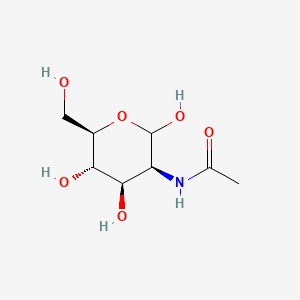
CAS · 3615-17-6
Product Overview
N-Acetyl-D-mannosamine is a high-purity biochemical-reagents supplied for industrial and specialty chemical applications. Contact our team for specifications, packaging options and lead times.
Product Specifications
| Appearance | Off white to white powder |
|---|---|
| Purity (HPLC) | 98% min |
| HNMR (D₂O) | Conforms |
Applications
N-Acetyl-D-mannosamine is widely used in biochemical research, pharmaceutical development, and glycobiology due to its role as a key precursor in the biosynthesis of sialic acids, particularly N-acetylneuraminic acid. It is commonly used in studies of glycosylation pathways, cellular metabolism, and sialylation processes, enabling researchers to investigate the regulation and function of sialic-acid-containing glycoconjugates. In pharmaceutical research, it serves as a starting material or intermediate for synthesizing sialic acid derivatives and oligosaccharides relevant to antiviral, anticancer, and anti-inflammatory drug development. It is also applied in metabolic glycoengineering, where it can be introduced into living cells to modify cell-surface glycan structures for imaging, targeting, or therapeutic applications. Additionally, N-Acetyl-D-mannosamine is used in nutritional and biomedical studies exploring its potential roles in supporting sialic acid production in infants, modulating immune responses, and influencing neurological development. Its utility extends to analytical chemistry and biotechnology, where it aids in developing assays and tools for studying carbohydrate–protein interactions, glycan recognition, and enzymatic transformations.
Benefits
N-Acetyl-D-mannosamine offers several advantages that make it an essential compound in glycobiology and biomedical research. Its direct involvement in the sialic acid biosynthetic pathway allows precise control and modulation of sialylation in experimental systems, supporting detailed studies of glycan functions and cellular communication. The compound is highly useful in metabolic labeling strategies because cells readily incorporate it into sialic-acid-related pathways, enabling visualization or manipulation of glycans with minimal disruption to normal functions. As a synthetic intermediate, it provides high purity and reproducibility, supporting reliable production of sialylated molecules for therapeutic or diagnostic exploration. Its compatibility with enzymatic and chemical synthesis techniques enhances its value in constructing complex glycoconjugates. Research suggests that it may help improve sialic acid availability in physiological contexts where demand is high, offering potential benefits in developmental biology and neurobiology studies. The compound's relatively low toxicity and good stability further support its use in cell culture, biochemical assays, and preclinical modeling.
Conclusion
N-Acetyl-D-mannosamine is a crucial carbohydrate building block with broad applications in glycobiology, pharmaceutical research, and metabolic engineering. Its central role in sialic acid biosynthesis makes it an indispensable tool for studying cell-surface glycosylation, developing sialylated therapeutics, and exploring carbohydrate-mediated biological processes. The compound's stability, versatility, and compatibility with biological systems contribute to its importance in both basic research and applied biomedical development. Overall, N-Acetyl-D-mannosamine provides a reliable and valuable foundation for advancing understanding and innovation in glycoscience.
Previous
Riboflavin-5-phosphate Sodium丨CAS 130-40-5
Next