
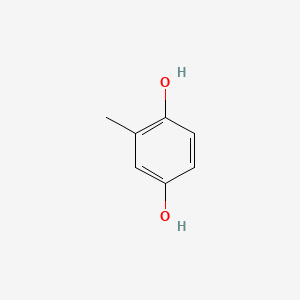
CAS · 95-71-6
Product Overview
2,5-Dihydroxytoluene, with the Chemical Abstracts Service (CAS) number 95-71-6, is an organic compound. It is also known as 2-methylhydroquinone or toluhydroquinone. This compound is a dihydroxy derivative of toluene, featuring hydroxyl groups at the 2 and 5 positions of the benzene ring. 2,5-Dihydroxytoluene is widely used in chemical synthesis, industrial applications, and research due to its reactivity and versatility.
Product Specifications
| Property | Specification |
|---|---|
| Appearance | White crystal powder |
| Content | 99% min |
| Melting point | 126 min |
| Ash | 0.04% max |
| Metals | 10ppm max |
| Loss on drying | 0.5% max |
| Absorptions K at 440nm | 1.2 max |
| Absorptions at 520nm | 0.8 max |
| Absorptions at 750nm | 0.5 max |
Applications
1. Chemical Synthesis:
- Intermediate: 2,5-Dihydroxytoluene丨95-71-6 is used as an intermediate in the synthesis of various organic compounds, including dyes, pigments, and pharmaceuticals.
- Polymerization: It serves as a monomer or comonomer in the production of polymers and resins, contributing to the development of high-performance materials.
2. Dye and Pigment Industry:
- Dye Synthesis: It is used in the synthesis of azo dyes and other colorants for textiles, plastics, and inks.
- Photographic Chemicals: 2,5-Dihydroxytoluene is used in the production of photographic developers and other imaging chemicals.
3. Pharmaceuticals:
- Drug Intermediate: It is used as a building block in the synthesis of pharmaceutical compounds, including antioxidants and anti-inflammatory agents.
4. Antioxidants:
- Stabilizer: 2,5-Dihydroxytoluene is used as an antioxidant in the stabilization of polymers, fuels, and lubricants, preventing degradation caused by oxidation.
5. Research and Development:
- Chemical Probes: It is used in research to study oxidation-reduction reactions and the behavior of phenolic compounds.
- Enzyme Studies: It serves as a substrate for enzymes involved in the metabolism of phenolic compounds.
Benefits
1. Reactivity:
- The presence of hydroxyl groups makes 2,5-Dihydroxytoluene highly reactive, enabling its use in a wide range of chemical transformations.
2. Versatility:
- Its applications span chemical synthesis, dye production, pharmaceuticals, and polymer chemistry, highlighting its versatility.
3. Antioxidant Properties:
- Its ability to act as an antioxidant makes it valuable in stabilizing materials and preventing oxidative degradation.
4. Cost-Effectiveness:
- As a commercially available compound, 2,5-Dihydroxytoluene is relatively inexpensive, making it accessible for industrial and research use.
5. Research Utility:
- Its role as a chemical probe and substrate in enzyme studies makes it a valuable tool in chemical and biochemical research.
Conclusion
2,5-Dihydroxytoluene丨95-71-6 is a versatile and reactive compound with applications in chemical synthesis, dye production, pharmaceuticals, and polymer chemistry. Its antioxidant properties and role as an intermediate in the synthesis of various compounds make it an indispensable tool in industrial and research settings. While it offers numerous benefits, proper handling and disposal practices are essential to ensure its safe and effective use. As research and technology continue to advance, 2,5-Dihydroxytoluene will remain a key component in the development of new materials, dyes, and pharmaceutical compounds.
Previous
N-Acetyl-L-leucine丨CAS 1188-21-2
Next