
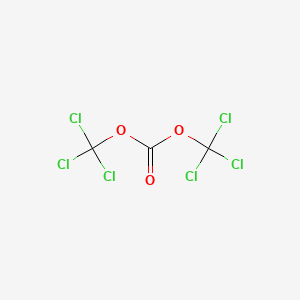
CAS · 32315-10-9
Product Overview
Triphosgene is a high-purity pharmaceutical-intermediates supplied for industrial and specialty chemical applications. Contact our team for specifications, packaging options and lead times.
Product Specifications
| Appearance | White crystal |
|---|---|
| Purity | 98.5% min |
| MP | 77~81 °C |
| Loss on drying | 0.7% max |
| Acid value | 0.2% max |
Applications
Triphosgene is a versatile reagent used primarily in the field of organic synthesis, particularly for the preparation of isocyanates, carbamates, and urethanes. It is often employed as a safer and more efficient substitute for phosgene, a highly toxic and corrosive chemical, in the synthesis of various compounds. In the pharmaceutical industry, Triphosgene is used in the synthesis of pharmaceutical intermediates, where it enables the production of compounds with specific chemical functionalities, such as carbamoylation reactions. It also plays a significant role in the production of agricultural chemicals, including herbicides and pesticides, by facilitating the creation of carbamate-based compounds, which are widely used as insecticides and fungicides. In addition, Triphosgene is involved in the development of polyurethanes, where it acts as a key building block in the production of flexible foams, coatings, and adhesives. Its ability to introduce carbonyl and carbamate groups makes it an essential tool in many chemical industries, providing both reactivity and stability for a range of applications.
Benefits
The primary benefits of Triphosgene are rooted in its role as a safer and more practical alternative to phosgene in industrial and laboratory settings. Due to its relatively lower toxicity compared to phosgene, Triphosgene provides a safer working environment for chemical synthesis, particularly in the production of valuable intermediates and final products. Its stability and ease of handling make it an attractive reagent for the synthesis of isocyanates, carbamates, and polyurethanes, where precise control of chemical reactions is critical. In the pharmaceutical and agrochemical industries, the ability to use Triphosgene to form carbamate linkages enables the creation of a variety of bioactive compounds, including drugs and pesticides with improved efficacy and stability. Additionally, Triphosgene's application in the production of polyurethanes contributes to the development of durable and versatile materials used in coatings, adhesives, and insulation products. The overall benefit of Triphosgene lies in its efficiency and versatility as a reagent, enabling the creation of complex molecules while minimizing the risks associated with more hazardous chemicals like phosgene.
Conclusion
Triphosgene (CAS 32315-10-9) serves as a crucial reagent in the synthesis of a variety of chemical compounds, particularly in the pharmaceutical, agrochemical, and materials industries. Its ability to replace phosgene in many applications significantly enhances the safety and efficiency of chemical processes. From the production of isocyanates and carbamates in drug and pesticide manufacturing to its role in the development of polyurethanes, Triphosgene provides vital reactivity and stability in chemical synthesis. Its use in these industries not only facilitates the creation of essential compounds but also contributes to safer and more sustainable manufacturing practices. The widespread applicability and safety profile of Triphosgene underscore its importance as an indispensable tool in modern chemical and industrial processes.
Previous
1,4-Diacryloylpiperazine丨CAS 6342-17-2
Next