
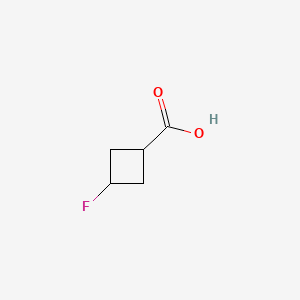
CAS · 123812-79-3
Product Overview
trans-3-fluorocyclobutane-1-carboxylic acid is a high-purity pharmaceutical-intermediates supplied for industrial and specialty chemical applications. Contact our team for specifications, packaging options and lead times.
Product Specifications
| Appearance: | White solid |
|---|---|
| 1H NMR Spectrum: | Conforms |
| Mass: | Conforms |
| Purity (GC): | 97% min |
Applications
trans-3-Fluorocyclobutane-1-carboxylic acid is primarily used in medicinal chemistry as a building block for the synthesis of fluorinated pharmaceuticals, enzyme inhibitors, and bioactive heterocycles. Its fluorine atom enhances metabolic stability, lipophilicity, and receptor binding affinity in drug candidates, while the carboxylic acid enables selective coupling to amines, alcohols, or other nucleophiles. In organic synthesis, it serves as an intermediate for constructing cyclobutane-containing scaffolds, constrained ring systems, and chiral molecules. The compound is also utilized in structure-activity relationship studies to explore the effects of fluorination and ring strain on biological activity, chemical reactivity, and molecular conformation.
Benefits
The benefits of trans-3-fluorocyclobutane-1-carboxylic acid include its defined trans stereochemistry, chemical versatility, and fluorine-enhanced properties. The rigid cyclobutane ring imposes conformational constraints, which can improve target selectivity and stability in bioactive molecules. The carboxylic acid group allows efficient functionalization, facilitating amide, ester, or other derivatives. The fluorine atom contributes to enhanced metabolic stability, bioavailability, and molecular recognition in biological systems. Additionally, the compound is stable under standard laboratory conditions and soluble in common organic solvents, making it convenient for multi-step synthetic sequences and incorporation into complex molecules.
Conclusion
In summary, trans-3-fluorocyclobutane-1-carboxylic acid is a fluorinated cyclobutane intermediate used in medicinal chemistry, organic synthesis, and bioactive molecule development. Its trans stereochemistry, carboxylic acid functionality, and fluorine substitution provide chemical versatility, conformational rigidity, and enhanced biological properties. With its stability, reactivity, and stereochemical precision, it serves as a valuable building block for the synthesis of fluorinated drugs, constrained ring systems, and complex chemical architectures.
Previous
4-(4-Ethylpiperazin-1-ly)aniline丨CAS 115619-01-7
Next
1-tert-Butyl 3-methyl (3S,5R)-5-aminopiperidine-1,3-dicarboxylate丨CAS 1263197-89-2