CAS · 9003-39-8
Product Overview
Polyvinylpyrrolidone is a high-purity pharmaceutical-excipients supplied for industrial and specialty chemical applications. Contact our team for specifications, packaging options and lead times.
Product Specifications
| Appearance | White or yellowish-white hygroscopic powder or flakes |
|---|---|
| Solubility | Freely soluble in water, in ethanol (96 percent), methanol, very slightly soluble in acetone |
| Identification A | To comply the test by IR |
| Identification B | An orange-yellow precipitate is formed |
| Identification C | A pale blue precipitate is formed |
| Identification D | A deep red colour is produced |
| Identification E | The substance dissolves |
| Appearance of solution | Clear and coloration NMT B6, BY6 or R6 |
| PH (in 5% solution) | 3.0~5.0 |
| Viscosity, as K-value | 22.5~27.0 |
| Aldehydes, as Acetaldehyde | 500ppm max |
| Peroxides, as H₂O₂ | 400ppm max |
| Hydrazine | 1ppm max |
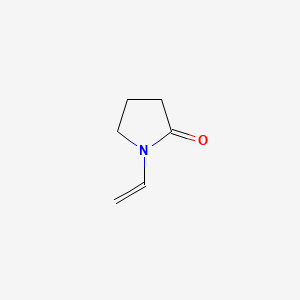
| Impurity A (1-Vinylpyrrolidin-2-one) | 10ppm max |
| Impurity B (2-Pyrrolidone) | 3.0% max |
| Lead | 10ppm max |
| Water | 5.0% max |
| Sulfated ash / Residue on ignition | 0.1% max |
| Formic acid | 0.5% max |
| Assay, as Nitrogen content | 11.5~12.8% |
| Max. 100 aerobic plate count | 10 CFU/g max |
| Max. 100 Mold and Yeast | 10 CFU/g max |
| Microbiological status | No Escherichia Coli/g No Pseudomonas aeruginosa/g No Salmonella/10g No Staphylococcus aureus/g |
Applications
1. Pharmaceutical Industry
Polyvinylpyrrolidone is widely used as a multifunctional excipient in drug formulation:
Binder in tablet manufacturing for enhanced cohesion and stability.
Disintegrant to promote tablet dissolution and improve bioavailability.
Film-forming agent in coatings and drug delivery films.
Carrier in solid dispersions to improve the solubility of poorly soluble drugs.
Used in injectables and ophthalmic formulations due to its excellent biocompatibility and safety profile.
2. Cosmetics and Personal Care
PVP is extensively used in:
Hair sprays and styling gels for film-forming and fixative properties.
Skin creams and lotions as a stabilizer and viscosity enhancer.
Toothpastes and mouthwashes for its binding and film-forming actions.
3. Medical Applications
Used in wound dressings and antiseptic solutions (e.g., Povidone-Iodine) due to its non-toxic, water-soluble polymeric nature.
Acts as a plasma volume expander in emergency medicine under the trade name PVP-iodine.
4. Food Industry
Employed as a stabilizer and clarifying agent in beverages like wine and beer to remove polyphenols and prevent haze formation.
Recognized as a food additive (E1201) for use as a thickener and emulsifier.
5. Adhesives and Coatings
Used in water-based adhesives and coatings for paper, wood, and textiles.
Serves as a protective colloid in emulsion polymerization.
6. Textile and Printing
Aids in dye dispersion and fixation.
Used in ink formulations and paper coating applications for improved print quality.
7. Electronics and Industrial Uses
Utilized in photolithography and semiconductor fabrication.
Serves as a stabilizer for nanoparticle synthesis (e.g., silver or gold nanoparticles).
Functions as a lubricant in certain metalworking fluids.
Benefits
✅ Water Solubility and Biocompatibility
Highly soluble in water and safe for use in medical and food applications.
✅ Film-Forming and Binding Properties
Excellent adhesive and cohesive characteristics useful across pharmaceuticals, cosmetics, and coatings.
✅ Versatility in Molecular Weight Grades
Available in various grades (e.g., PVP K-12 to K-90), allowing fine-tuned performance depending on viscosity, solubility, and application needs.
✅ Non-toxic and Inert
Generally recognized as safe (GRAS), non-irritating, and chemically inert under many conditions.
✅ Stabilizing Agent
Prevents aggregation and degradation in colloidal systems, formulations, and emulsions.
Conclusion
Polyvinylpyrrolidone (PVP), CAS 9003-39-8, is a versatile and widely used synthetic polymer, known for its excellent water solubility, biocompatibility, and binding capabilities. From pharmaceuticals and cosmetics to food processing and nanotechnology, PVP plays a vital role as a stabilizer, binder, film-former, and dispersant. Its adaptability to different molecular weights and compatibility with diverse substances ensures its continued importance across multiple industries, supporting the formulation of safer, more effective, and better-performing products.
Previous
Coconut Oil Fatty Acid丨CAS 61788-47-4
Next