
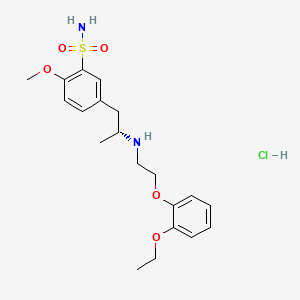
CAS · 106463-17-6
Product Overview
Tamsulosin hydrochloride is a high-purity a-api supplied for industrial and specialty chemical applications. Contact our team for specifications, packaging options and lead times.
Product Specifications
| Property | Specification |
|---|---|
| Appearance | White or off-white crystalline powder |
| Content (HPLC, dry product method, w/w) | 98.0% - 102.0% |
| Solubility | Easily soluble in formic acid; Slightly soluble in methanol; Slightly soluble in water and anhydrous ethanol; Insoluble in ether |
| a) IR identification | The infrared spectrum of the obtained sample should be compared with the standard infrared spectrum |
| b) Chloride identification | Chloride test positive |
| c) HPLC identification | The retention time of the main peak in the chromatogram of the test solution should be consistent with that of the standard solution in the HPLC determination |
| Rotation | -17° to -21° |
| Loss on drying (w/w) | 0.5% max |
| Residue on ignition (w/w) | 0.1% max |
| Heavy metal | 20 ppm max |
| Related substances (HPLC a/a) | a) Any unknown impurity: 0.1% a/a max b) Total impurity: 0.5% a/a max |
| Isomer | 0.3% max |
Applications
1. Benign Prostatic Hyperplasia (BPH)
This is the principal and FDA-approved use of tamsulosin.
● Symptom relief: Tamsulosin improves lower urinary tract symptoms (LUTS) like frequent urination, weak stream, straining, and nocturia by relaxing the muscles in the bladder and prostate.
● Non-surgical management: It is a preferred first-line treatment for patients who are not immediate candidates for surgery.
● Combination therapy: Often prescribed in combination with 5-alpha-reductase inhibitors (e.g., finasteride) to improve efficacy and long-term outcomes in moderate to severe BPH.
2. Ureteral Stones (Off-label Use)
Tamsulosin hydrochloride丨CAS 106463-17-6 is frequently used off-label to facilitate the passage of kidney stones, particularly distal ureteral calculi.
● Smooth muscle relaxation: Helps dilate the ureter, easing stone passage and reducing pain episodes.
● Reduced need for surgery: Lowers the rate of surgical intervention by promoting spontaneous stone expulsion.
3. Chronic Prostatitis/Chronic Pelvic Pain Syndrome
In some cases, especially in type III prostatitis, tamsulosin is used to relieve urinary symptoms.
● Improved urinary flow: Alleviates discomfort and difficulty urinating associated with chronic pelvic pain conditions.
4. Neurogenic Bladder and Bladder Outlet Obstruction
Used in select patients with spinal cord injuries or neurological conditions to improve voiding and reduce catheter dependency.
Benefits
1. Targeted Mechanism with Fewer Side Effects
Due to its selectivity for alpha-1A receptors in the prostate over those in blood vessels (alpha-1B), tamsulosin minimizes systemic side effects like dizziness or orthostatic hypotension, common with non-selective alpha blockers.
2. Once-Daily Dosing
Tamsulosin hydrochloride丨CAS 106463-17-6 is typically administered once daily, improving patient compliance and convenience compared to medications requiring multiple doses.
3. Rapid Onset of Action
Many patients experience symptom improvement within a few days to a week of starting therapy, offering prompt relief.
4. Non-Invasive Alternative to Surgery
In patients who are poor surgical candidates or prefer conservative treatment, tamsulosin offers an effective, low-risk alternative to procedures like transurethral resection of the prostate (TURP).
5. Minimal Impact on Blood Pressure
This is especially beneficial for elderly patients who may already be taking antihypertensive medications. Tamsulosin's low propensity for causing hypotension makes it safer in this demographic.
6. Improved Quality of Life
By alleviating bothersome urinary symptoms, tamsulosin enhances the overall quality of life in aging males, allowing them to sleep better and maintain more active daily routines.
Conclusion
Tamsulosin hydrochloride丨CAS 106463-17-6 is a clinically proven, well-tolerated medication that plays a critical role in the management of benign prostatic hyperplasia and other lower urinary tract disorders. Its receptor selectivity, ease of use, and rapid efficacy make it a mainstay in urological practice. In addition to its approved indications, its off-label benefits in ureteral stone management and neurogenic bladder conditions further underscore its versatility and value in improving patient outcomes.
Would you like a reference list or citations to support this overview?
Previous
Next
Conclusion
A concise summary and suitability assessment for this product is available on request. Contact our team to discuss whether it fits your process and quality requirements.