
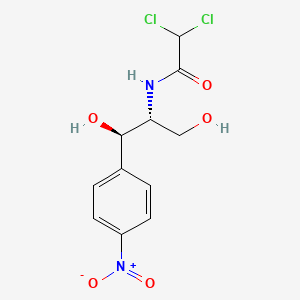
CAS · 56-75-7
Product Overview
Chloramphenicol is a high-purity a-api supplied for industrial and specialty chemical applications. Contact our team for specifications, packaging options and lead times.
Product Specifications
| Grade | USP41 |
|---|---|
| Appearance | Fine, white to grayish-white or yellowish-white, needle-like crystals or elongated plates |
| Assay (on dried basis) | 97.0% ~ 103.0% |
| Solubility | Freely soluble in alcohol, propylene glycol, acetone, and ethyl acetate; slightly soluble in water |
| Identification (IR) | Spectrum complies with the reference standard spectrum |
| Identification (HPLC) | The retention time of the major peak in the chromatogram of the assay preparation corresponds to that in the chromatogram of the standard preparation |
| Melting Range | 149~153 °C |
| Specific Rotation | +17.0 ~ +20.0 ° |
| Crystallinity | Meets the requirements |
| Bacterial Endotoxins | 0.2 EU/mg max |
| pH (1% solution) | 4.5 ~ 7.5 |
| Any Individual Impurity | 1.0% max |
| Total Impurities | 2.0% max |
| Residual Solvents - Methanol | 3000 ppm max |
| Residual Solvents - Ethanol | 5000 ppm max |
| Residual Solvents - Chlorobenzene | 360 ppm max |
Applications
Chloramphenicol is a broad-spectrum antibiotic widely used in human and veterinary medicine to treat bacterial infections. It is applied for systemic infections such as typhoid fever, meningitis, respiratory tract infections, and eye infections. In veterinary practice, it is used to treat bacterial diseases in livestock, poultry, and aquaculture. Chloramphenicol is formulated as tablets, capsules, injectable solutions, and eye or ear drops. Additionally, it serves as a research tool in microbiology for studying bacterial protein synthesis and antibiotic resistance mechanisms.
Benefits
The benefits of Chloramphenicol include its broad-spectrum activity against gram-positive and gram-negative bacteria, making it effective for treating diverse infections. It penetrates tissues and body fluids well, including the central nervous system, which is critical for treating meningitis and systemic infections. Its bacteriostatic mechanism inhibits protein synthesis in bacteria, helping control infection progression. In research, it provides a reliable standard for studying bacterial growth, protein synthesis inhibition, and antimicrobial resistance.
Conclusion
Chloramphenicol is a valuable antibiotic with extensive applications in human and veterinary medicine as well as microbiological research. Its broad-spectrum efficacy, tissue penetration, and bacteriostatic properties make it a critical tool for infection management and scientific studies. By enabling effective treatment of bacterial infections and supporting research, Chloramphenicol continues to play an essential role in healthcare and laboratory applications.
Previous
Next