
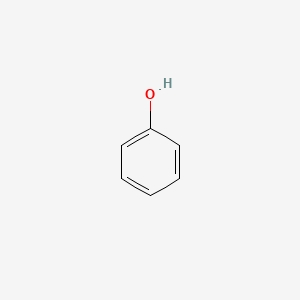
CAS · 108-95-2
Product Overview
Phenol丨CAS 108-95-2, is an aromatic organic compound composed of a hydroxyl group (-OH) attached to a benzene ring. Also known as carbolic acid, phenol is a colorless to pale pink crystalline solid at room temperature with a distinctive sweet, tar-like odor. It is both industrial and medically significant, widely used as a precursor in chemical manufacturing, a disinfectant, and a laboratory reagent.
Despite its toxicity and corrosive nature, phenol remains crucial across several sectors due to its reactivity, antiseptic properties, and versatility as a synthetic building block.
Product Specifications
| Grade | AR |
|---|---|
| Appearance | White crystalline powder or solid |
| Purity (GC) | 99% min |
| Infrared spectrum | Conforms to Structure |
| Solubility (5% in 95% EtOH) | Clear, Colorless |
| Water by Karl Fischer | 0.2% max |
| Melting point | 38 to 43°C |
Applications
A. Chemical Industry (Primary Use)
1.Precursor to Plastics and Resins
Phenol is primarily used to produce bisphenol A (BPA), which is then polymerized to make polycarbonates and epoxy resins.
Reacts with formaldehyde to produce phenol-formaldehyde resins (e.g., Bakelite), widely used in molded products, adhesives, and laminates.
2.Caprolactam Production
Phenol丨CAS 108-95-2 is a precursor in the synthesis of caprolactam, the monomer for nylon-6, a critical material for textiles and engineering plastics.
3.Alkylphenols and Non-Ionic Surfactants
Used to produce nonylphenol and octylphenol, which are key intermediates for making non-ionic detergents and surfactants.
B. Pharmaceuticals and Healthcare
1.Antiseptic and Disinfectant
Due to its bactericidal properties, phenol was historically used in antiseptic surgery (introduced by Joseph Lister).
Still employed in throat sprays, oral anesthetics, and skin lotions in highly diluted forms.
2.Drug Manufacturing
Used as an intermediate in producing aspirin (acetylsalicylic acid) and other pharmaceutical compounds.
Acts as a solvent and preservative in injectable drugs, especially vaccines.
C. Laboratory and Analytical Use
● Used as a standard reagent in labs for protein isolation (phenol-chloroform extraction), particularly in molecular biology.
● Acts as a pH regulator in some chemical reactions and dye production processes.
D. Agriculture
● Used in synthesizing herbicides, pesticides, and fungicides, such as 2,4-dichlorophenoxyacetic acid (2,4-D).
● Serves as a precursor for plant growth regulators and preservatives in veterinary formulations.
E. Cosmetics and Personal Care (Restricted Use)
● Found in chemical peels and exfoliants in dermatology for skin resurfacing treatments, though its use is highly regulated due to toxicity.
Benefits
A. High Reactivity and Versatility
● The electron-rich aromatic ring and hydroxyl group make phenol an ideal candidate for electrophilic substitution and condensation reactions, enabling the synthesis of a vast array of chemicals.
B. Strong Antimicrobial Activity
● Effective at low concentrations against a broad spectrum of bacteria, fungi, and viruses, making it useful in hospital sanitation and disinfection protocols.
C. Crucial to Modern Material Science
● Phenol-derived polymers like epoxies and polycarbonates offer strength, clarity, chemical resistance, and thermal stability, crucial for electronics, automotive, and aerospace industries.
D. Role in Biotechnology and Medicine
● In molecular biology, phenol extraction is a gold-standard method for DNA and RNA purification, helping ensure the purity needed for diagnostics and research.
Conclusion
Phenol丨CAS 108-95-2 remains a cornerstone chemical in industrial production, medical formulations, and scientific research. Its role as a precursor to plastics, pharmaceuticals, antiseptics, and high-performance materials underscores its broad significance. However, its toxic and corrosive nature demands careful handling and responsible usage. As technology advances, greener and safer alternatives are being explored to retain phenol's functionality while improving sustainability and safety. Nonetheless, phenol continues to be a vital, multifaceted compound indispensable to modern industry and innovation.
Previous
Methylisothiazolinone丨CAS 2682-20-4
Next