
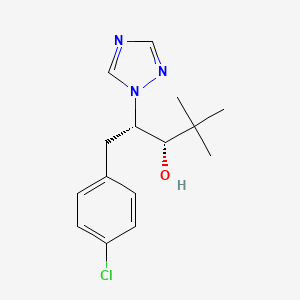
CAS · 76738-62-0
Product Overview
Paclobutrazol丨CAS 76738-62-0 (PBZ) is a synthetic plant growth regulator (PGR) belonging to the class of triazole compounds. It functions primarily as a growth retardant by inhibiting gibberellin biosynthesis, which slows down excessive elongation growth in plants. Paclobutrazol has become an essential tool in agriculture, horticulture, and forestry for managing plant stature, improving stress tolerance, and optimizing yield.
Product Specifications
| Appearance | White or off-white powder |
|---|---|
| Assay | 95% min |
| pH | 4.0–9.0 |
| Loss on drying | 0.5% max |
| Acetone insoluble | 0.5% max |
Applications
A. Growth Regulation and Size Control
Paclobutrazol丨CAS 76738-62-0 is widely used to reduce excessive vegetative growth in crops, trees, and ornamental plants.
By inhibiting gibberellin production, PBZ induces compact, sturdier plants with shorter internodes.
Commonly applied in fruit orchards (apple, citrus, mango), ornamental nurseries, turfgrass management, and forestry plantations to control height and improve structural integrity.
B. Yield Enhancement and Fruit Quality
PBZ-treated plants often show increased flowering, fruit set, and improved fruit quality.
In crops like mango, citrus, grapes, and apples, paclobutrazol enhances fruit firmness, sugar content, and color.
It delays fruit drop and promotes uniform ripening, boosting marketability and economic return.
C. Stress Tolerance Improvement
Paclobutrazol improves plant resistance to abiotic stresses such as drought, salinity, heat, and cold by altering physiological and biochemical pathways.
Treated plants exhibit enhanced water use efficiency, improved antioxidant activity, and better root growth, contributing to survival under adverse conditions.
D. Forestry and Landscaping
Used in forestry to manage seedling growth for easier handling and transplanting.
In landscaping and urban forestry, PBZ maintains compact tree and shrub shapes, reducing maintenance costs and improving aesthetics.
Popular in bonsai culture for controlling tree size and promoting compact form.
E. Turfgrass Management
Applied to golf courses, sports fields, and lawns to control excessive turf growth, reducing mowing frequency.
Improves turf density and stress tolerance, resulting in better playing surfaces and lower maintenance.
Benefits
A. Effective Growth Control
Allows growers to maintain desired plant sizes and shapes, making crop management and harvesting easier.
Prevents lodging and damage caused by overly tall or weak stems.
B. Increases Crop Yield and Quality
Improved flowering and fruit retention lead to higher yields.
Enhanced fruit quality parameters such as soluble solids content, firmness, and color increase market value.
C. Enhances Stress Resistance
Better tolerance to drought and salinity improves crop survival and productivity in challenging environments.
Reduces irrigation requirements through improved water use efficiency.
D. Cost and Labor Savings
Reduces the need for frequent pruning, staking, or mowing.
Lowers labor and input costs associated with crop maintenance.
Conclusion
Paclobutrazol丨CAS 76738-62-0 is a versatile and widely used plant growth regulator that effectively controls plant height by inhibiting gibberellin biosynthesis. Its applications range from fruit orchards, ornamental plants, turfgrass, to forestry, offering benefits including compact growth, improved yield and fruit quality, and enhanced stress tolerance. While it presents some environmental challenges due to soil persistence, ongoing research and proper management ensure that PBZ remains a valuable tool for sustainable agriculture and horticulture practices worldwide.
Previous
2-Diethylaminoethyl Hexanoate丨CAS 10369-83-2
Next