
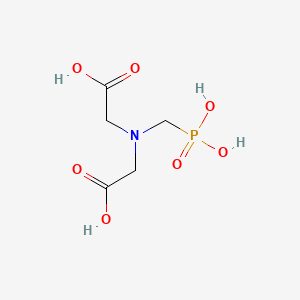
CAS · 5994-61-6
Product Overview
N-(Carboxymethyl)-N-(phosphonomethyl)-glycine is a high-purity pesticide-intermediate supplied for industrial and specialty chemical applications. Contact our team for specifications, packaging options and lead times.
Product Specifications
| Appearance: | White crystals or powder |
|---|---|
| Assay: | 98% min |
| Substance in alkali: | 0.2% max |
| Loss on drying: | 0.5% max |
| Chlorion: | 0.3% max |
Applications
1. Herbicide Intermediate
This compound is a key intermediate or degradation product related to the synthesis and environmental breakdown of glyphosate, one of the most widely used non-selective herbicides in the world.
It may also be involved in formulation chemistry or as a reference substance in environmental fate studies.
2. Environmental Studies
Frequently analyzed in soil and water testing to monitor glyphosate degradation.
Used as a biomarker for glyphosate persistence and its impact on ecosystems.
3. Research Chemical
Employed in analytical chemistry and toxicology studies to understand the biodegradation pathways and residue behavior of glyphosate.
Supports studies in biochemistry and environmental toxicology.
Benefits
✅ Supports Herbicide Development and Monitoring
Understanding its role as a metabolite or intermediate improves the effectiveness and safety of glyphosate-based herbicides.
Helps in assessing environmental impact and regulatory compliance.
✅ Environmental Relevance
As a breakdown product of glyphosate, its detection helps in tracking herbicide residues and planning safe usage levels in agriculture.
✅ Tool for Regulatory Testing
Essential in environmental fate models and residue analysis required for pesticide approvals.
Used in water quality monitoring due to concerns over glyphosate contamination.
✅ Chemical Reference Material
Provides a standard reference in labs performing residue detection or developing new herbicide formulations.
Conclusion
N-(Carboxymethyl)-N-(phosphonomethyl)-glycine (CAS 5994-61-6) plays a significant role in herbicide science and environmental monitoring, particularly concerning glyphosate degradation and residue analysis. It contributes to sustainable agricultural practices through accurate detection, formulation improvement, and regulatory safety assessments.
Previous
Indole-3-carbinol丨CAS 700-06-1
Next