
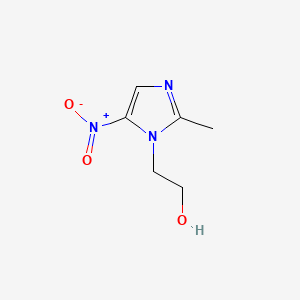
CAS · 443-48-1
Product Overview
Metronidazole丨443-48-1 is an antibiotic and antiprotozoal medication used primarily to treat a variety of infections, including those caused by anaerobic bacteria and protozoa. It is widely used in clinical medicine due to its effectiveness in treating infections in different organ systems, as well as its ability to penetrate tissues effectively.
Mechanism of Action
Metronidazole丨443-48-1 works by disrupting the DNA synthesis in microbial cells. It is reduced inside the cell, where the nitro group gets activated by the anaerobic conditions typical of certain bacterial and protozoal infections. The reduction of the nitro group creates reactive intermediates that damage DNA, leading to cell death. The drug is particularly effective against anaerobic bacteria and protozoa, as they are capable of reducing metronidazole to its active form.
Product Specifications
| Property | Specification |
|---|---|
| Grade | USP43 |
| Identification | IR: Comparison with Metronidazole CRS |
| HPLC | The retention time of the major peak in the chromatogram of the Assay preparation corresponds to that in the chromatogram of the Standard preparation, as obtained in the Assay |
| Loss on drying | 0.5% max |
| Solubility | Slightly soluble in water, acetone, alcohol, and methylene chloride |
| Residue on ignition | 0.1% max |
| Heavy Metals | 20 ppm max |
| Related Substances | Tinidazole related compound A: 0.1% max |
| Total impurities | 0.2% max |
| Organic residues (Ethylene oxide) | 1 ppm max |
| Assay (On dried basis) | 99.0% - 101.0% C₆H₉N₃O₃ |
Applications
Metronidazole is widely used to treat infections caused by anaerobic bacteria and protozoa. Common applications include:
Bacterial Infections:Anaerobic Infections: Metronidazole丨443-48-1 is often prescribed to treat infections caused by anaerobic bacteria, which thrive in oxygen-deprived environments. These infections include conditions such as:
Intra-abdominal infections (e.g., peritonitis, diverticulitis)
Pelvic infections (e.g., pelvic inflammatory disease)
Abscesses in various organs (e.g., liver abscesses)
Skin and Soft Tissue Infections: Metronidazole is effective in treating skin infections caused by anaerobes, such as cellulitis or necrotizing fasciitis.
Oral Infections: It is used to treat dental infections and periodontal diseases caused by anaerobic bacteria, including gingivitis and periodontitis.
Protozoal Infections:
Giardiasis: Metronidazole丨443-48-1 is a first-line treatment for Giardia lamblia, a protozoan that causes giardiasis, which is characterized by diarrhea, cramping, and malabsorption.
Amebiasis: Metronidazole is used to treat infections caused by Entamoeba histolytica, which causes amoebic dysentery and can lead to liver abscesses.
Trichomoniasis: Metronidazole is the drug of choice for treating Trichomonas vaginalis, a protozoan parasite responsible for trichomoniasis, a sexually transmitted infection.
Balantidiasis: A less common infection caused by Balantidium coli, which Metronidazole can also treat.
Helicobacter pylori Eradication:
Metronidazole丨443-48-1 is sometimes used as part of a combination therapy to eradicate Helicobacter pylori, a bacterium associated with peptic ulcers.
Topical Use:
Metronidazole is also available in topical formulations (e.g., creams or gels) for the treatment of rosacea, a chronic skin condition that causes redness and pustules on the face.
Surgical Prophylaxis:
It may be used in prophylaxis for certain surgical procedures, particularly those involving the gastrointestinal tract or areas prone to anaerobic infections.
Benefits
Broad Spectrum Activity:
Metronidazole丨443-48-1 is effective against a wide range of anaerobic bacteria and protozoa, which makes it a useful option for treating infections in various organ systems.
Effective in Penetrating Tissues:
Metronidazole is well-absorbed and can penetrate tissues easily, including the brain, liver, and bone, which is essential for treating deep-seated infections.
Good Oral Bioavailability:
When taken orally, metronidazole has good bioavailability (about 90%), which allows it to be effective in treating both localized and systemic infections.
Topical Applications:
The availability of topical metronidazole formulations allows for effective management of skin conditions like rosacea, with reduced systemic side effects.
Combination Therapy:
Metronidazole丨443-48-1 is often used in combination with other antibiotics or antiprotozoal agents to treat polymicrobial infections or to enhance the effectiveness of therapy in conditions like helicobacter pylori eradication.
Conclusion
Metronidazole丨443-48-1 is a widely used antibiotic and antiprotozoal agent that is effective in treating a variety of infections, particularly those caused by anaerobic bacteria and protozoa. Its ability to penetrate tissues effectively, combined with its good bioavailability, makes it an essential treatment for a broad range of infections, including giardiasis, trichomoniasis, amebiasis, and anaerobic bacterial infections. It is generally well-tolerated but may cause side effects such as gastrointestinal discomfort, neurological symptoms, and allergic reactions. Like all medications, it requires careful monitoring, especially during prolonged use or in patients with liver impairment. Despite these concerns, its benefits in treating certain infections far outweigh the potential risks, making it a valuable tool in modern medicine.
Previous
Alanyl-glutamine丨CAS 39537-23-0
Next