CAS · 60259-81-6
Product Overview
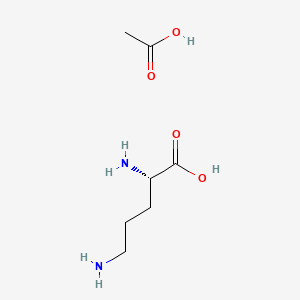
L-Ornithine acetate is a high-purity pharmaceutical-intermediates supplied for industrial and specialty chemical applications. Contact our team for specifications, packaging options and lead times.
Product Specifications
| Grade: | AJI92 |
|---|---|
| Appearance: | White or off-white powder |
| Assay: | 98.0%~102.0% |
| Specific Rotation [α]20/D: | +9.0°~+11.0° |
| Chloride (Cl): | 0.10% max |
| Sulphate (SO4²⁻): | 0.03% max |
| Ammonium (NH4⁺): | 0.02% max |
| Iron (Fe): | 10 ppm max |
| Residue on ignition: | 0.10% max |
| Heavy metal (Pb): | 10 ppm max |
| Arsenic: | 1 ppm max |
| Loss on drying: | 9.5% max |
| pH: | 6.0~7.5 |
Applications
L-Ornithine acetate is an amino acid salt widely used in pharmaceutical, nutraceutical, and food applications. In pharmaceuticals, it is applied in formulations aimed at supporting liver function, detoxification, and recovery from hepatic disorders due to its role in the urea cycle, helping to remove excess ammonia from the body. In sports nutrition and dietary supplements, L-ornithine acetate is used to promote muscle recovery, reduce fatigue, and improve exercise endurance by aiding in nitrogen balance and amino acid metabolism. It also finds applications in functional foods and beverages designed for cognitive support, general wellness, or liver health. Additionally, in research settings, it is employed as a biochemical reagent to study amino acid metabolism, urea cycle pathways, and nitrogen homeostasis in physiological and cellular models.
Benefits
L-Ornithine acetate offers multiple physiological benefits linked to its role as a non-proteinogenic amino acid. It helps reduce blood ammonia levels, supporting liver detoxification and improving metabolic balance, which can aid in recovery from hepatic stress or disorders. In sports and fitness contexts, it contributes to decreased fatigue, enhanced endurance, and accelerated muscle recovery through improved nitrogen disposal and protein metabolism. Its acetate salt form enhances solubility and bioavailability, making it easy to incorporate into oral formulations or functional foods. Additionally, L-ornithine acetate is generally well-tolerated, non-toxic at recommended dosages, and synergizes with other amino acids, vitamins, or antioxidants to optimize overall health and metabolic efficiency.
Conclusion
L-Ornithine acetate is a valuable amino acid derivative used in pharmaceuticals, dietary supplements, and functional foods to support liver health, reduce fatigue, and enhance metabolic efficiency. Its solubility, bioavailability, and physiological benefits make it a versatile ingredient in health-focused formulations, while its application in research continues to provide insights into amino acid metabolism and nitrogen balance.
Previous
Next