
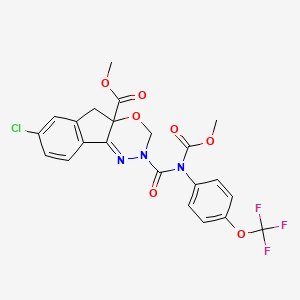
CAS · 144171-61-9
Product Overview
Indoxacarb is a high-purity insecticides supplied for industrial and specialty chemical applications. Contact our team for specifications, packaging options and lead times.
Product Specifications
| Appearance: | Off-white powder |
|---|---|
| Total mass fraction of Indocarb: | 95.0% min |
| Indocarb (S) mass fraction: | 90% min |
| Indoxacarb (S:R): | 9.0% min |
| Moisture: | 0.5% max |
| pH Value: | 5.0 to 7.0 |
| DMF residue: | 0.5% max |
Applications
1. Agricultural Use
Control of Lepidopteran Pests: Effective against caterpillars and moth larvae such as armyworms, bollworms, and loopers on crops like cotton, vegetables, fruits, and field crops.
Management of Other Insect Pests: Controls certain beetle and fly species harmful to crops.
Use on Diverse Crops: Applied on vegetables, fruits, cotton, corn, and ornamental plants through foliar sprays or soil treatments.
2. Public Health and Urban Pest Control
Used to manage cockroach and ant populations in urban and domestic settings due to its effectiveness and lower risk profile.
3. Integrated Pest Management (IPM)
Fits well into IPM strategies due to its selective toxicity and reduced impact on beneficial insects and natural predators when applied correctly.
Benefits
Novel Mode of Action: Blocks insect sodium channels leading to paralysis and death, reducing cross-resistance with other insecticide classes.
Low Mammalian Toxicity: Exhibits minimal toxicity to mammals and birds, enhancing safety for humans and non-target animals.
Reduced Environmental Impact: Moderate persistence in the environment with low bioaccumulation potential.
Effective Against Resistant Pests: Valuable in managing pests that have developed resistance to other insecticides.
Selective and Compatible: Minimizes harm to beneficial insects such as pollinators and natural predators.
Conclusion
Indoxacarb (CAS 144171-61-9) is an effective and versatile insecticide widely used in agriculture and urban pest control. Its unique sodium channel blocking activity, combined with a favorable safety and environmental profile, makes it a key component in sustainable pest management programs. Responsible use within IPM frameworks helps maintain its efficacy while protecting beneficial organisms and reducing resistance development.
Previous
Next