CAS · 10373-78-1
Product Overview
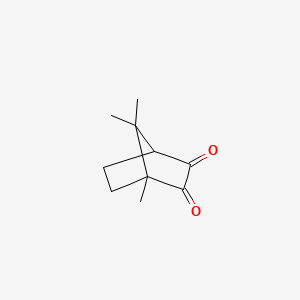
DL-Bornane-2,3-dione is a high-purity pharmaceutical-intermediates supplied for industrial and specialty chemical applications. Contact our team for specifications, packaging options and lead times.
Product Specifications
| Description: | Yellow crystalline powder |
|---|---|
| Purity(GC): | 98%min |
| Melting point: | 198-204 deg C |
| Solubility: | Freely soluble in Alcohal, Ether, & N-hexane |
Applications
1. Dental Materials (Photoinitiator in Resin Composites)
Primary use is as a photoinitiator in light-cured dental resins and composites.
Initiates polymerization of acrylate and methacrylate monomers when exposed to blue visible light (approx. 470 nm).
Used in:
Dental fillings
Adhesives
Sealants
Cements
2. Polymer Chemistry
Functions as a visible light photoinitiator in non-dental applications, especially where UV light is undesirable.
Used in 3D printing resins, coatings, and adhesives that require deep curing with visible light.
3. Research and Development
Studied for its photochemical behavior, especially in radical polymerization mechanisms.
Used in academic and industrial research related to light-curable systems and initiator efficiency.
Benefits
✅ Efficient Visible-Light Photoinitiator
Excels in initiating free-radical polymerization under blue LED light, which is safer and more energy-efficient than UV.
✅ Low Toxicity Profile
Demonstrates low systemic toxicity, making it ideal for use in biomedical materials like dental composites.
✅ Good Stability
Chemically stable and retains reactivity under standard storage and handling conditions.
✅ Controlled Curing
Enables controlled and uniform polymerization, crucial for achieving high-quality, bubble-free dental restorations and clear 3D prints.
✅ Camphor-Derived Structure
Biocompatible bicyclic backbone contributes to its safety and performance in oral healthcare applications.
Conclusion
DL-Bornane-2,3-dione (CAS 10373-78-1), also known as camphorquinone, is a critical visible-light photoinitiator used extensively in dental resins, coatings, and light-curable adhesives. Its efficiency, safety, and compatibility with blue LED light sources make it a cornerstone material in modern photopolymerization technologies, particularly in the dental and polymer processing industries.
Previous
Hydroxypropyl Acrylate丨CAS 25584-83-2
Next