
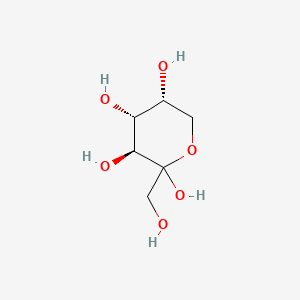
CAS · 57-48-7
Product Overview
D(-)-Fructose is a high-purity sugar-units supplied for industrial and specialty chemical applications. Contact our team for specifications, packaging options and lead times.
Product Specifications
| Grade | USP43 |
|---|---|
| Appearance | White crystalline powder |
| Assay | 98.0~102.0% |
| Solubility | Very soluble in water, soluble in ethanol |
| Identification | Infrared absorption spectrophotometry: Conforms |
| Color of solution | Conforms |
| Acidity | 0.50 ml max |
| Loss on drying | 0.5% max |
| Residue on ignition | 0.5% max |
| Chloride | 0.018% max |
| Sulfate | 0.025% max |
| Heavy Metals | 5 ppm max |
| Arsenic | 1 ppm max |
| Calcium and magnesium (as Calcium) | 0.005% max |
| Limit of hydroxymethylfurfural | Conforms |
| Bacterial Endotoxins | 1.25 EU/mg max |
Applications
D(-)-Fructose is extensively used in the food and beverage industry as a sweetener due to its high sweetness intensity compared with sucrose. It is a key component in fruit juices, soft drinks, dairy products, bakery items, confectionery, and health supplements. Because of its excellent solubility and hygroscopic properties, it helps maintain moisture and improve texture in processed foods. In pharmaceuticals, D(-)-Fructose serves as an excipient in oral formulations, syrups, and nutritional solutions, and is sometimes used in intravenous formulations for specific metabolic indications. In biotechnology and fermentation industries, it acts as a carbon source for microbial growth and bioprocessing. It is also applied in sports nutrition and energy products due to its rapid metabolism in the liver, providing quick energy replenishment. Additionally, D(-)-Fructose is used in research laboratories for metabolic studies and as a reference standard in analytical chemistry.
Benefits
One of the primary benefits of D(-)-Fructose is its high relative sweetness, which allows manufacturers to use lower quantities to achieve the desired taste profile, potentially reducing overall caloric density in certain formulations. It has a low glycemic index compared to glucose, resulting in a slower and more moderate rise in blood glucose levels when consumed in controlled amounts. Its strong humectant properties help retain moisture in food systems, improving shelf life and texture stability. D(-)-Fructose also enhances flavor perception and can mask undesirable tastes in pharmaceutical preparations. From a processing standpoint, it dissolves readily in water and participates efficiently in Maillard reactions, contributing to desirable browning and flavor development in baked goods. Furthermore, it is naturally derived and widely accepted in global regulatory frameworks, making it suitable for broad international markets.
Conclusion
D(-)-Fructose is a versatile and highly functional natural sugar with wide-ranging applications in food, pharmaceuticals, biotechnology, and nutrition. Its sweetness potency, solubility, humectant properties, and metabolic characteristics provide both technical and commercial advantages. When used appropriately and within recommended dietary guidelines, D(-)-Fructose remains an important ingredient supporting product innovation and performance across multiple industries.
Previous
D-mannopyranose 1,2,3,4,6-pentaacetate丨CAS 25941-03-1
Next