CAS · 480-40-0
Product Overview
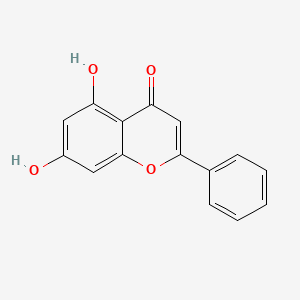
Chrysin is a high-purity daily-chemicals supplied for industrial and specialty chemical applications. Contact our team for specifications, packaging options and lead times.
Product Specifications
| Characteristics: | Light yellow fine powder |
|---|---|
| Assay (HPLC): | 99.0% min |
| Odor: | Odorless |
| Identification: | IR spectrum |
| Loss on drying: | 0.5% max |
| Ash: | 0.2% max |
| Melting point: | 284 to 290℃ |
| Heavy Metal: | 10ppm max |
| Arsenic: | 2ppm max |
| Residue Solvents DMF: | 880ppm max |
| Ethanol: | 5000ppm max |
| Microbiological Items Total Plate Count: | 1000cfu/g max |
| Yeast & Mold: | 100cfu/g max |
| E.coli: | Negative |
| Salmonella: | Negative |
| Staphylococcus Aureus: | Negative |
Applications
1. Nutraceutical and Dietary Supplements
Chrysin is often used in dietary supplements marketed for:
Testosterone support: Claimed to inhibit aromatase (enzyme converting testosterone to estrogen), though evidence is limited.
Bodybuilding and sports nutrition: Often combined with other ingredients like tribulus or zinc.
2. Pharmaceutical and Medical Research
Chrysin has been extensively studied in vitro and in animal models for potential therapeutic effects:
Anti-inflammatory: Modulates cytokines, prostaglandins, and NF-κB pathways.
Antioxidant: Scavenges reactive oxygen species (ROS) and boosts glutathione activity.
Anticancer: Shown to induce apoptosis and inhibit proliferation in some cancer cell lines.
Neuroprotective: Investigated for protecting neurons from oxidative stress and inflammation.
Hepatoprotective: May help protect liver cells from toxins and damage.
3. Cosmetics and Skincare
Chrysin is used in formulations for:
Anti-aging: Due to its antioxidant properties.
Skin lightening: May inhibit melanin production.
Anti-inflammatory creams: Helpful in reducing puffiness, especially around the eyes.
4. Food and Beverage Industry
Sometimes explored as a natural preservative or functional additive due to antioxidant properties.
Studied for enriching functional foods or beverages.
Benefits
1. Natural Antioxidant
Neutralizes free radicals, reduces oxidative stress.
Potential to prevent cellular damage in chronic conditions.
2. Anti-inflammatory Potential
Inhibits pro-inflammatory enzymes (COX, LOX) and cytokines.
Studied for support in arthritis, dermatitis, and neuroinflammation.
3. Cancer Research
May suppress cancer cell growth (e.g., breast, prostate, colon) in preclinical models.
Affects apoptotic and cell cycle regulatory proteins.
4. Brain Health and Anxiety Relief
Suggested to have anxiolytic effects by interacting with GABA receptors.
May enhance memory and learning by reducing oxidative stress in the brain.
5. Hormonal Balance (Controversial)
Promoted as a natural aromatase inhibitor, but oral bioavailability is poor, and human evidence is limited.
Conclusion
Chrysin (CAS 480-40-0) is a naturally occurring flavonoid with promising biological properties, especially as an antioxidant, anti-inflammatory, and potential anticancer agent. While it is popular in supplements for hormone support and bodybuilding, these uses remain controversial due to low bioavailability and lack of robust clinical evidence. Nonetheless, its role in cosmetics, nutraceuticals, and pharmaceutical research continues to grow. Future innovation in delivery systems may unlock more practical uses of this bioactive compound.
Previous
2-Ethylhexyl Stearate丨CAS 22047-49-0
Next