
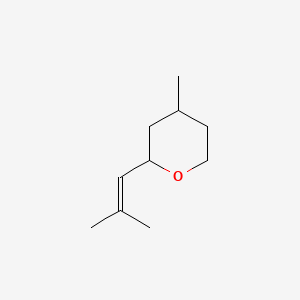
CAS · 16409-43-1
Product Overview
Rose oxide is a high-purity essences-and-fragrances supplied for industrial and specialty chemical applications. Contact our team for specifications, packaging options and lead times.
Product Specifications
| Appearance | Clear transparent liquid |
|---|---|
| Purity | 99% min |
| Aroma | Strong rose aroma |
| Refractive index | 1.449~1.457 |
| Density | 0.8560~0.875 |
| Acid value (mg KOH/g) | 1.0 max |
Applications
Rose oxide is primarily used in perfumery and fragrance formulation due to its strong and distinctive rose-like aroma. It is commonly incorporated into fine fragrances, cosmetics, soaps, shampoos, and body care products to enhance floral scent profiles. In high-end perfume manufacturing, it is used in trace amounts to provide natural rose authenticity and improve scent complexity. In the flavor industry, rose oxide is used as a flavoring agent in small quantities for confectionery, beverages, and food aroma enhancement. It is also applied in research on aroma chemistry, particularly in studying terpene oxidation pathways and fragrance structure–odor relationships. Additionally, it is used in synthetic fragrance chemistry as a building block for creating more complex floral scent molecules.
Benefits
One of the main benefits of rose oxide is its extremely low odor threshold, meaning only very small amounts are required to achieve a noticeable fragrance effect. This makes it highly cost-efficient in fragrance formulation. The compound provides a natural, soft, and long-lasting floral scent that improves overall fragrance stability and complexity. Its molecular structure allows good compatibility with other fragrance ingredients, enabling smooth blending with citrus, woody, and floral fragrance notes. Rose oxide is also relatively stable in standard cosmetic formulation environments when protected from excessive heat and oxidation. In addition, synthetic production of rose oxide allows consistent quality control and supply stability compared to natural extraction from essential oils, which can vary based on botanical source and seasonal factors.
Conclusion
Rose oxide is a highly valued fragrance ingredient widely used in perfumes, cosmetics, and flavor applications. Its powerful rose aroma, low usage concentration, and good blending performance make it an important component in modern fragrance chemistry. As demand for natural-style floral fragrances continues to grow in consumer products, rose oxide remains a key aromatic compound in the fragrance industry.
Previous
Trans-2-Hexenyl Acetate丨CAS 2497-18-9
Next