
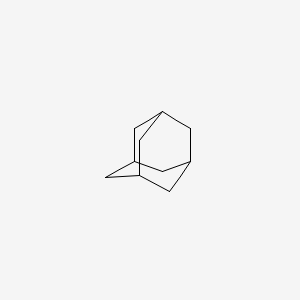
CAS · 281-23-2
Product Overview
Adamantane is a high-purity pharmaceutical-intermediates supplied for industrial and specialty chemical applications. Contact our team for specifications, packaging options and lead times.
Product Specifications
| Description | Crystalline powder |
|---|---|
| Identification | IR Spectrum: The infrared spectrum of the test sample should be consistent with that of the reference standard |
| Specific Tests | Minimum Solubility 5% in CCl4 |
| Chromatographic purity (GC) | 99.0% min |
| Related Substances | Exo-TCD: 0.5% max Endo-TCD: 0.2% max Any other impurity: 0.5% max Total impurities: 1.0% max |
Applications
Adamantane is widely used in pharmaceuticals, materials science, and organic synthesis due to its rigid, cage-like structure and unique chemical properties. In the pharmaceutical field, it serves as a core scaffold for antiviral and antiparkinsonian drugs, providing structural stability and lipophilicity that improve drug bioavailability and membrane permeability. It is a key building block in the synthesis of compounds such as amantadine and rimantadine, which target viral infections like influenza, as well as in CNS-active agents. In materials science, Adamantane derivatives are used to enhance thermal stability, rigidity, and hydrophobicity in polymers, dendrimers, and coatings. It is also employed as a reference compound in organic synthesis and mechanistic studies, facilitating investigations of steric effects, strain energy, and reactivity in highly symmetrical cage structures. Additionally, Adamantane is applied in supramolecular chemistry to construct host–guest systems and functional molecular architectures.
Benefits
Adamantane offers several advantages that make it a valuable compound in research and industrial applications. Its rigid and symmetrical structure provides high thermal and chemical stability, enhancing the durability of materials and the pharmacokinetic properties of drug candidates. The lipophilic nature of Adamantane improves membrane permeability, allowing drugs to cross biological barriers more effectively. Its compatibility with diverse chemical modifications enables flexible derivatization for pharmaceuticals, polymers, and functional materials. Adamantane's unique steric and electronic properties also make it useful for studying reaction mechanisms, molecular strain, and cage chemistry. Furthermore, its low toxicity and predictable chemical behavior support safe handling in laboratory and manufacturing environments.
Conclusion
Adamantane is a versatile and structurally unique compound with applications in pharmaceuticals, materials science, and organic chemistry. Its rigidity, stability, and lipophilicity enhance drug performance, material properties, and molecular research. Overall, Adamantane provides both functional and structural benefits, making it an essential building block and research tool in chemical, pharmaceutical, and materials development.
Previous
Neodecanoic Acid丨CAS 26896-20-8
Next