
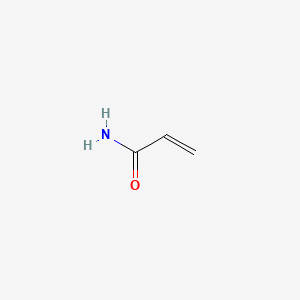
CAS · 79-06-1
Product Overview
Acrylamide丨79-06-1 is a chemical compound that is primarily used in the production of polymers and plastics, and as a monomer in various industrial processes. It is a colorless, odorless solid that can dissolve in water and has a variety of industrial, commercial, and scientific applications. Acrylamide can also form in certain foods during high-temperature cooking processes, such as frying, baking, or roasting, particularly in foods containing asparagine (an amino acid) and reducing sugars.
Product Specifications
| Property | Specification |
|---|---|
| Appearance | White crystal |
| Acrylamide | 98.0% min |
| Moisture | 0.8% max |
| Chromaticity (20% solution) | 20 max |
| Fe (%) | 0.0001% max |
| Cu (%) | 0.0001% max |
| Inhibitor (ppm) | 5 max |
| Electric conductivity (μS/cm) | 20 max |
| pH value | 6.5 to 7.5 |
Applications
1. Industrial Applications
Acrylamide is primarily used in the production of polyacrylamide, a polymer that has a wide range of uses in various industries.
● Water Treatment: Polyacrylamide is commonly used as a flocculant in water and wastewater treatment. It helps remove suspended particles from water by facilitating their aggregation into larger clumps that can be easily removed.
● Oil and Gas Industry: Acrylamide derivatives, such as polyacrylamide, are used in drilling fluids and as viscosity enhancers in hydraulic fracturing (fracking), where they improve the flow and recovery of oil and gas.
● Paper and Pulp Industry: Acrylamide is used in the paper industry as a retention aid in paper manufacturing. It helps to improve the retention of fillers and fibers, reducing waste and improving paper quality.
● Cosmetics: Polyacrylamide is found in various cosmetic formulations, particularly in creams, gels, and lotions, as it enhances texture and improves the stability of emulsions.
● Mining: Acrylamide is used in the mining industry for flotation and separation processes to remove impurities from metals and minerals.
2. Food Industry (Formation During Cooking)
Acrylamide is not intentionally added to food products, but it can form during the high-temperature cooking of certain foods, particularly those that are rich in carbohydrates and asparagine.
● Formation of Acrylamide: The Maillard reaction, a chemical reaction between reducing sugars and amino acids (such as asparagine), at high temperatures (above 120°C), is the primary pathway through which acrylamide forms in food. This is why acrylamide is found in foods like fried potatoes, potato chips, coffee, baked goods, and cereal products.
● Health Risks: Acrylamide丨79-06-1 is classified as a potential human carcinogen by the International Agency for Research on Cancer (IARC), based on animal studies that show that long-term exposure to acrylamide can increase the risk of developing cancers, particularly neuroblastomas, kidney cancer, and endometrial cancer. The concern arises from the potential cancer risk associated with long-term exposure to acrylamide in food, although human studies have not conclusively confirmed a direct link.
● Regulations and Guidelines: Regulatory agencies like the U.S. Food and Drug Administration (FDA) and the European Food Safety Authority (EFSA) have recommended strategies for reducing acrylamide levels in food, such as optimizing cooking temperatures, reducing frying times, and adjusting processing conditions to minimize formation. For example, cooking at lower temperatures or blanching potatoes before frying can significantly reduce acrylamide formation.
3. Pharmaceutical and Medical Research
Acrylamide and its derivatives have several applications in biochemical and medical research.
● Gel Electrophoresis: Acrylamide is used in the preparation of polyacrylamide gels for gel electrophoresis, a laboratory technique used to separate and analyze proteins and nucleic acids based on their size and charge. Polyacrylamide gels are widely used in molecular biology and biochemistry for protein analysis and DNA sequencing.
● Drug Delivery: Acrylamide-based polymers are used in the drug delivery industry to create hydrogels that can control the release of therapeutic agents. These polymers are useful in the design of biodegradable drug delivery systems for sustained or controlled release of medications.
4. Environmental Applications
Acrylamide丨79-06-1 is utilized in a number of environmental applications:
● Soil Stabilization: Polyacrylamide is used in soil stabilization to prevent erosion and improve water retention in agricultural applications. The polymer helps bind soil particles together, reducing soil erosion during heavy rain.
● Landfill Leachate Treatment: Acrylamide丨79-06-1 is used in landfill leachate treatment to remove contaminants from water before it is released into the environment. The polymer helps in solid-liquid separation processes to reduce the environmental impact of leachate.
5. Other Industrial Uses
● Textile Industry: Acrylamide is used as a dye fixative in textile processing, which helps improve the adhesion of dyes to fabrics.
● Construction: Acrylamide-based compounds are used in concrete additives to improve the performance and durability of concrete in construction.
Benefits
The key benefits and differentiators of this product are available on request. Contact us for performance data, comparative specifications and selection guidance.
Conclusion
Acrylamide丨79-06-1 is a useful industrial chemical with a wide range of applications, especially in the production of polyacrylamide for water treatment, oil recovery, paper processing, and cosmetic formulations. However, its potential health risks, particularly carcinogenicity, neurotoxicity, and reproductive toxicity, warrant caution in both occupational and dietary exposure. While acrylamide formation in food cannot be entirely avoided, reducing its levels through cooking practices and regulating its presence in industrial products can mitigate potential risks. As research into acrylamide's health effects continues, regulatory agencies maintain guidelines to help protect public health and safety.
Previous
Polyethyleneimine丨CAS 9002-98-6
Next