CAS · 133-32-4
Product Overview
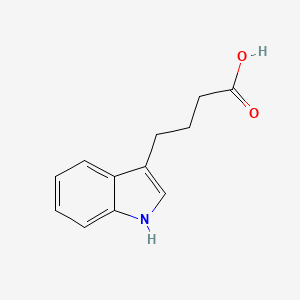
3-Indolebutyric acid (IBA) is a naturally occurring plant hormone classified as an auxin with the chemical formula C12H13NO2 and CAS number 133-32-4. Auxins are critical regulators of plant growth and development, and IBA is particularly important for its role in root initiation and development. It is widely used in agriculture, horticulture, and forestry as a rooting hormone to enhance propagation and improve plant establishment.
Product Specifications
| Appearance | Off-white crystal |
|---|---|
| Content | 98% min |
| Melting point | 122°C to 124°C |
| Residues after ignition | 0.5% max |
| Loss on drying | 0.5% max |
Applications
A. Rooting Agent in Vegetative Propagation
IBA is the most commonly used auxin for stimulating root formation on cuttings of a wide variety of plants, including ornamentals, fruit trees, vegetables, and forestry species.
Applied as powder, liquid dips, or gels, IBA promotes adventitious root formation, leading to quicker and more uniform rooting.
Widely used in commercial nurseries for propagation of crops such as roses, grapes, apples, citrus, avocado, and conifers.
B. Tissue Culture and Micropropagation
3-Indolebutyric acid丨CAS 133-32-4 is a standard component in plant tissue culture media, often combined with cytokinins, to induce root formation on regenerated shoots.
Enables mass propagation of valuable plant genotypes under controlled laboratory conditions.
Used to develop disease-free and genetically uniform planting material.
C. Improving Transplant Success
Treating seedlings and transplants with IBA enhances root development, increasing their ability to uptake water and nutrients.
Results in improved establishment rates, better stress tolerance, and vigorous growth after transplanting.
D. Enhancing Crop Growth and Yield
Besides rooting, IBA influences cell elongation and division, indirectly promoting overall plant vigor.
In some fruit crops, IBA application can improve fruit set, size, and quality by stimulating hormonal balance during early development.
E. Weed Control (Auxin Herbicide Synergy)
Though IBA itself is not a herbicide, it is structurally related to synthetic auxin herbicides.
Can be used in synergy with certain agrochemicals to manage plant growth and development in crop production systems.
Benefits
A. Effective Rooting Stimulator
IBA significantly improves root initiation speed and root quality in vegetative propagation.
Promotes healthy root architecture with numerous root hairs, enhancing water and nutrient absorption.
Reduces rooting time, enabling faster production cycles in nurseries.
B. Broad Spectrum Crop Compatibility
Effective in a wide range of woody and herbaceous plants, including difficult-to-root species.
Used globally in fruit, ornamental, forestry, and vegetable crop production.
C. Enhances Plant Survival and Productivity
Stronger root systems lead to improved plant survival under stress (drought, transplant shock).
Results in higher yields and better quality due to healthier root and shoot growth.
D. Low Toxicity and Environmental Impact
IBA is naturally metabolized by plants and degrades quickly in the environment, making it relatively safe.
Has low toxicity to non-target organisms when used properly.
E. Cost-Effective Propagation Tool
Its use reduces the need for expensive grafting or seed propagation.
Facilitates clonal propagation, preserving desired traits of elite cultivars.
Conclusion
3-Indolebutyric acid丨CAS 133-32-4 is a crucial plant hormone widely utilized as a rooting stimulant in vegetative propagation and tissue culture. Its ability to promote rapid, healthy root development across a broad range of plant species has made it indispensable in modern horticulture, agriculture, and forestry. By improving root systems, IBA enhances plant establishment, stress resilience, and overall productivity, thereby contributing significantly to efficient and sustainable crop production systems.
Previous
(+)-Abscisic Acid丨CAS 21293-29-8
Next