
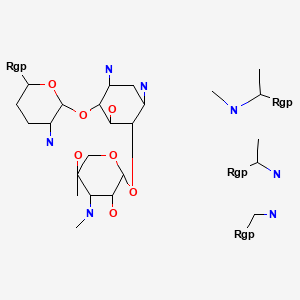
CAS · 1405-41-0
Product Overview
Gentamicin sulfate丨1405-41-0 is an antibiotic belonging to the aminoglycoside class of antibiotics. It is derived from the bacterium Micromonospora purpurea and is primarily used to treat a variety of bacterial infections. It works by inhibiting bacterial protein synthesis, making it effective against a wide range of gram-negative and gram-positive bacteria.
Product Specifications
| Property | Specification |
|---|---|
| Grade | USP35 |
| Appearance | A white or off-white powder |
| Solubility | Freely soluble in water, practically insoluble in alcohol |
| Assay | 590 µg/mg (calculated on the dried basis) |
| Composition | C1: 25% to 50%, C1a: 10% to 35%, C2+C2a: 25% to 55% |
| Identification - A | Sulfate reaction: Positive |
| Identification - B | IR: The spectrum obtained is consistent with the spectrum obtained with Gentamicin sulfate Rs |
| pH | 3.5 to 5.5 |
| Methanol | 1.0% max |
| Specific Rotation | +107 to +121° |
| Loss on Drying | 18.0% max |
| Residue on Ignition | 1.0% max |
| Bacterial Endotoxins | 0.71 EU/mg max |
| Sterility | Complies with the test for sterility |
Applications
1. Medical Applications
Antibiotic Treatment
● Infections: Gentamicin sulfate is primarily used to treat serious bacterial infections, particularly sepsis, urinary tract infections (UTIs), respiratory tract infections, intra-abdominal infections, and bone infections.
● Gram-Negative Infections: It is particularly effective against gram-negative bacteria such as Escherichia coli, Pseudomonas aeruginosa, and Klebsiella species.
● Combination Therapy: Gentamicin is often used in combination therapy with other antibiotics, such as beta-lactams, to broaden the spectrum of bacterial coverage.
Topical and Ophthalmic Use
● Ophthalmic Infections: Gentamicin sulfate is used in eye drops and ointments to treat conjunctivitis and other eye infections caused by bacteria.
● Topical Applications: Gentamicin sulfate is used in topical creams and ointments to treat skin infections, including wounds, burns, and soft tissue infections.
2. Veterinary Medicine
Animal Infections
● Livestock and Pets: Gentamicin sulfate is used in veterinary medicine to treat infections in dogs, cats, and livestock. It is used for conditions such as pneumonia, skin infections, and urinary tract infections.
● Intramuscular/Intra-abdominal Use: Gentamicin can be administered intramuscularly or intravenously in animals to treat systemic infections.
3. Industrial Applications
Antimicrobial Agent in Biotechnology
● Cell Culture Media: Gentamicin sulfate is commonly used as an antibiotic in cell culture media to prevent bacterial contamination in laboratory settings. It ensures the purity of cell lines used in research, including genetic engineering and biomanufacturing.
Benefits
1.Broad-Spectrum Activity
● Gentamicin sulfate is effective against a broad range of both gram-negative and gram-positive bacteria, making it a versatile option in treating various infections.
2.Effective Against Resistant Strains
● It remains effective against certain antibiotic-resistant strains, particularly Pseudomonas and Enterobacter species, which are often resistant to other antibiotics.
3.Topical and Systemic Use
● It can be administered systemically (via injections or intravenous drip) or applied topically (for skin and eye infections), providing flexibility in treatment.
4.Low Risk of Resistance Development
● When used appropriately, gentamicin sulfate has a relatively low risk of bacterial resistance development compared to other classes of antibiotics, though overuse or misuse can still lead to resistance.
5.Used in Combination Therapy
● It is often used in combination with other antibiotics, increasing its effectiveness and expanding its spectrum of activity against multiple bacterial pathogens.
Conclusion
Gentamicin sulfate丨1405-41-0 is an important broad-spectrum antibiotic with significant applications in human and veterinary medicine. It is used to treat a wide range of bacterial infections and is especially effective against gram-negative bacteria. Additionally, it plays a role in biotechnology as a preventative antibiotic in laboratory settings. Its versatility, potency, and effectiveness make it a critical tool in the fight against bacterial infections.
Previous
Apramycin Sulfate丨CAS 65710-07-8
Next