
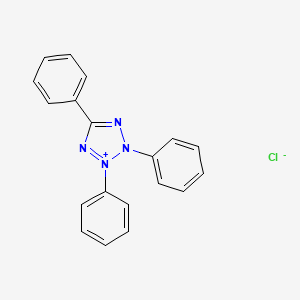
CAS · 298-96-4
Product Overview
2,3,5-Triphenyltetrazolium chloride is a high-purity analytical-reagents supplied for industrial and specialty chemical applications. Contact our team for specifications, packaging options and lead times.
Product Specifications
| Appearance | Off-white color or light yellow powder |
|---|---|
| Assay | 98% min |
| Solubility (50mg/ml H₂O) | Clear |
| Loss on Drying | 2% max |
Applications
Biochemical and Cellular Research
2,3,5-Triphenyltetrazolium chloride丨298-96-4 (TTC) is widely used as a redox indicator in biochemical assays. It serves as a viability stain for detecting cellular respiration by being reduced to an insoluble red formazan product in the presence of metabolically active cells.
Microbial Viability Testing
TTC is frequently used in microbiology to differentiate between live and dead bacteria in culture media. It is incorporated into agar plates to assess bacterial metabolic activity, where live bacteria reduce it to produce a red color, while inactive cells remain colorless.
Plant and Seed Viability Assessment
In agriculture and botany, TTC is utilized to test seed viability. By staining active, respiring seeds red, researchers and farmers can determine the percentage of viable seeds, aiding in crop quality control.
Medical and Clinical Applications
TTC is used in medical research to study tissue viability, particularly in assessing infarcted (dead) tissue in stroke and myocardial infarction models. It helps visualize areas of cell death by differentiating between metabolically active and non-active tissues.
Enzyme Activity Studies
As a redox indicator, TTC is applied in enzyme activity assays to study cellular metabolism and oxidative phosphorylation, making it useful in metabolic and drug research.
Benefits
Reliable Indicator of Cellular Metabolism
2,3,5-Triphenyltetrazolium chloride丨298-96-4 provides a clear and quantifiable means of detecting metabolic activity, making it an essential tool in biochemical and microbiological research.
Efficient Seed Viability Testing
Its application in seed viability testing ensures better crop quality and agricultural productivity by identifying viable seeds for germination.
Diagnostic and Research Value in Medicine
TTC staining helps in the assessment of tissue viability in stroke and heart disease models, supporting research on treatments for ischemic conditions.
Simple and Cost-Effective Method
TTC-based assays are straightforward, rapid, and cost-effective, making them a preferred choice for many laboratory applications.
Conclusion
2,3,5-Triphenyltetrazolium chloride丨298-96-4 is a valuable reagent in biological, agricultural, and medical research. Its ability to indicate metabolic activity makes it an essential tool in microbial testing, seed viability assessment, enzyme activity studies, and tissue viability research. Its widespread use in these fields highlights its importance in scientific and clinical applications.
Previous
Nitrotetrazolium Blue Chloride丨CAS 298-83-9
Next