
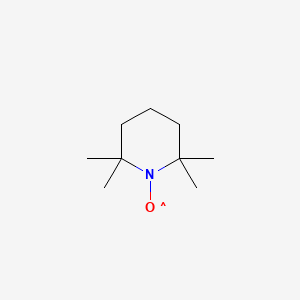
CAS · 2564-83-2
Product Overview
2,2,6,6-Tetramethylpiperidinooxy is a high-purity pharmaceutical-intermediates supplied for industrial and specialty chemical applications. Contact our team for specifications, packaging options and lead times.
Product Specifications
| Appearance | Red crystal |
|---|---|
| Purity (GC) | 98.5% min |
| Melting point | 36°C to 40°C |
| Moisture | 1.0% max |
| Ash | 0.1% max |
Applications
2,2,6,6-Tetramethylpiperidinooxy, commonly known as TEMPO, is widely used as a stable free radical in organic synthesis, polymer chemistry, and catalytic oxidation processes. It serves as a selective oxidizing agent for primary alcohols to aldehydes and secondary alcohols to ketones under mild conditions, often in combination with co-oxidants such as sodium hypochlorite or bleach. In polymer chemistry, it is used for nitroxide-mediated radical polymerization (NMP) to control polymer chain growth, molecular weight, and polymer architecture. TEMPO is also applied in the functionalization of cellulose, polysaccharides, and other biomaterials, enabling site-specific oxidation for material modification. Additionally, it is used as a radical scavenger in chemical reactions to stabilize reactive intermediates and prevent unwanted side reactions, as well as in analytical chemistry to study radical mechanisms and electron paramagnetic resonance (EPR) spectroscopy.
Benefits
2,2,6,6-Tetramethylpiperidinooxy offers several advantages that make it a valuable tool in chemical research and industrial applications. Its stability as a nitroxyl radical allows safe handling and long-term storage while maintaining consistent reactivity. The compound enables selective and mild oxidation of alcohols, minimizing over-oxidation and degradation of sensitive substrates. In polymer synthesis, TEMPO-mediated radical polymerization provides precise control over molecular weight and polymer structure, improving reproducibility and material properties. Its ability to act as a radical scavenger helps reduce side reactions and improves reaction efficiency. Additionally, TEMPO is compatible with a wide range of solvents and reaction conditions, enhancing its versatility for various synthetic and analytical applications. Its high efficiency in catalysis also reduces reagent consumption and environmental impact in oxidation processes.
Conclusion
2,2,6,6-Tetramethylpiperidinooxy is a highly versatile stable radical with applications in selective oxidation, controlled polymerization, radical scavenging, and material modification. Its stability, selectivity, and compatibility with diverse reaction conditions make it an indispensable tool in synthetic organic chemistry, polymer science, and analytical studies. Overall, TEMPO provides both functional and practical advantages, enabling precise chemical transformations and contributing to advances in material science and catalytic methodologies.
Previous
Next