
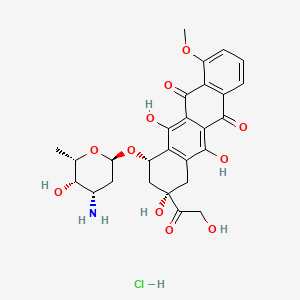
CAS · 25316-40-9
Product Overview
Doxorubicin hydrochloride is a high-purity a-api supplied for industrial and specialty chemical applications. Contact our team for specifications, packaging options and lead times.
Product Specifications
| Grade | USP38 |
|---|---|
| Appearance | Orange-red crystalline powder |
| Assay (by HPLC) | 98.0%-102.0% on anhydrous and solvent free basis |
| pH | 4.0-5.5 |
| Solubility | Soluble in water, in isotonic sodium chloride solution and in methanol. Practically insoluble in chloroform, in ether and in other organic solvents |
| Identification | The retention time of Doxorubicin peak in the chromatogram of Assay preparation corresponds to that in the standard preparation as obtained in Assay |
| Crystallinity | Meets the requirements of USP |
| Acetone and alcohol | Not more than 2.5% |
| Acetone | Not more than 0.5% |
| Methanol | Not more than 500ppm |
| Dichloromethane | Not more than 500ppm |
| n-Propanol | Not more than 5000ppm |
| 1,4-Dioxane | Not more than 250ppm |
| Chloroform | Not more than 60ppm |
| Water | Not more than 4.0% |
| Doxorubicinone | Not more than 0.5% |
| Daunorubicin | Not more than 0.5% |
| Epirubicin HCl | Not more than 0.5% |
| Any other impurity | Not more than 0.5% |
| Total impurities | Not more than 2.0% |
| Storage | In an airtight container, protected from light, store in a dry place below 25℃ |
Applications
Doxorubicin hydrochloride is widely used in oncology as an anthracycline chemotherapeutic agent for treating a broad range of cancers. It is included in many established treatment regimens for solid tumors and hematological malignancies due to its ability to interfere with DNA replication and cell division. It is used in the management of breast cancer, ovarian cancer, bladder cancer, lung cancer, soft tissue sarcomas, and pediatric tumors, as well as lymphomas and leukemias. In research settings, the compound is frequently used as a reference anticancer agent to study mechanisms of cytotoxicity, apoptosis, drug resistance, and tumor biology. It is also applied in investigations involving targeted drug delivery systems such as liposomes, nanoparticles, and antibody–drug conjugates, making it a model compound in studies aimed at improving chemotherapeutic selectivity and reducing systemic toxicity. Additionally, doxorubicin hydrochloride is utilized in laboratory assays to explore oxidative stress, DNA damage response, and cell-cycle regulation.
Benefits
The primary benefit of doxorubicin hydrochloride is its strong and broad-spectrum anticancer activity, which arises from multiple mechanisms, including DNA intercalation, topoisomerase II inhibition, and the generation of reactive species that disrupt cellular function. Its multifaceted mode of action makes it effective against rapidly dividing cancer cells and useful across diverse tumor types. The compound has decades of clinical use, giving it a well-characterized profile that allows clinicians and researchers to understand its behavior, dose relationships, and synergistic potential in combination therapies. Its inclusion in many standard regimens helps achieve treatment responses that can contribute to tumor shrinkage or disease control. In research, its predictable cytotoxic profile makes it a reliable benchmark compound for evaluating new delivery technologies, sensitizers, and combination strategies. Its widespread availability and consistent performance support reproducible results in experimental oncology.
Conclusion
Doxorubicin hydrochloride is an important anthracycline compound used extensively in cancer treatment and oncology research. Its strong anticancer activity, versatility across various tumor types, and usefulness as a model compound in scientific studies underscore its continued significance in both clinical and research environments. While its therapeutic use must be carefully managed due to potential side effects, its established role and broad applicability make it a central tool for advancing cancer treatment strategies and understanding cellular responses to chemotherapeutic stress.
Previous
Glycyrrhizic Acid丨CAS 1405-86-3
Next