
CAS · 105250-17-7
Product Overview
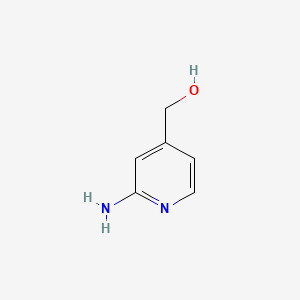
2-Aminopyridine-4-methanol丨105250-17-7 is a chemical compound that belongs to the class of aminopyridines and is often used as a building block in organic synthesis. Its structure consists of a pyridine ring with an amino group (-NH2) at the 2-position, a hydroxymethyl group (-CH2OH) at the 4-position, and it is frequently involved in the development of pharmaceutical and biological applications.
Synthesis
2-Aminopyridine-4-methanol丨105250-17-7 is often synthesized through reactions involving pyridine derivatives or substitution reactions that introduce the amino and hydroxymethyl groups into the pyridine ring. One common method involves the hydroxymethylation of 2-aminopyridine or the use of formaldehyde or related compounds to attach the hydroxymethyl group at the appropriate position.
Product Specifications
| Property | Value |
|---|---|
| Appearance | Off-White to white solid |
| Purity (HPLC) | 98% min |
| HNMR | Confirms to structure |
| Water (KF) | 0.5% max |
Applications
1.Pharmaceutical and Medicinal Chemistry:
Drug Development: 2-Aminopyridine-4-methanol丨105250-17-7 is used as a precursor in the synthesis of bioactive molecules that may have antimicrobial, antiviral, or anticancer properties. The pyridine and amino groups are often involved in the development of molecules that interact with enzymes, receptors, or other biological targets.
Kinase Inhibitors: It may be utilized in the synthesis of kinase inhibitors, which are valuable in the treatment of cancers, inflammatory diseases, and other conditions. The aminopyridine scaffold is known for its ability to bind to the ATP-binding site of certain kinases, making it a promising component for developing selective inhibitors.
Anticancer Research: In research, it has been explored as part of compounds designed to target specific pathways in cancer cells. The hydroxymethyl group can play a role in enhancing the solubility and stability of these compounds.
2.Organic Synthesis:
Building Block: The compound is used as a building block for the synthesis of more complex organic compounds, especially in the field of heterocyclic chemistry. Its functional groups-amino and hydroxymethyl-are valuable for modifying the electronic properties of other molecules.
Pyridine Derivatives: It can serve as an intermediate in the synthesis of pyridine derivatives, which are important in the manufacture of dyes, pesticides, and pharmaceuticals. Its ability to undergo various substitution reactions makes it a versatile intermediate in synthetic chemistry.
3.Catalysis:
The hydroxymethyl group attached to the pyridine ring can participate in certain catalytic reactions, particularly those involving nucleophilic attack or oxidation processes. As a ligand, the compound could potentially be involved in coordination chemistry, where the nitrogen in the pyridine ring acts as a donor to metals, making it useful in transition metal catalysis.
Its structure may also allow it to interact with transition metal catalysts in cross-coupling reactions or other synthetic transformations.
4.Biological Studies:
Enzyme Inhibition: Due to the presence of the amino group and the pyridine ring, this compound could be useful in enzyme inhibition studies. It may interact with specific enzymes, such as monoamine oxidase or proteases, making it useful for understanding enzyme function or enzyme inhibition.
Neurochemical Research: Pyridine derivatives like 2-aminopyridine-4-methanol can be useful in studying neurochemical pathways due to their ability to interact with neurotransmitter systems. The amine group can potentially interact with receptors or enzymes involved in neurotransmitter regulation.
5.Agriculture and Pest Control:
The pyridine structure is often used in the design of pesticides and herbicides. While 2-Aminopyridine-4-methanol丨105250-17-7 itself might not be directly used in large-scale agricultural applications, its derivatives or related compounds could potentially be explored for these purposes.
Herbicide or pesticide development might benefit from the compound's ability to interfere with metabolic processes in target organisms, acting as a potential bioactive agent.
Benefits
The key benefits and differentiators of this product are available on request. Contact us for performance data, comparative specifications and selection guidance.
Conclusion
2-Aminopyridine-4-methanol丨105250-17-7 is a versatile compound with important applications in organic synthesis, pharmaceutical development, and biological research. Its amine and hydroxymethyl groups make it a valuable intermediate for synthesizing bioactive compounds, particularly those involved in kinase inhibition, antimicrobial, and anticancer research. Its use in catalysis and enzyme inhibition studies further broadens its potential applications in both chemical synthesis and drug discovery. While it is considered relatively safe to handle in laboratory settings, appropriate safety precautions should be taken to avoid skin, eye, or respiratory irritation.
Previous
Next