CAS · 77-85-0
Product Overview
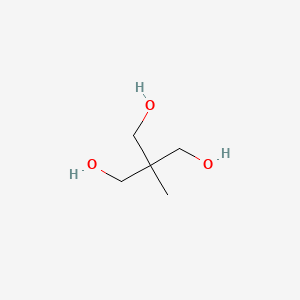
1,1,1-Tris(hydroxymethyl)ethane is a high-purity resins supplied for industrial and specialty chemical applications. Contact our team for specifications, packaging options and lead times.
Product Specifications
| Property | Specification |
|---|---|
| Appearance | White crystals |
| Assay | 95% min |
| Hydroxyl content | 41% min |
| Ash | 0.05% max |
| Moisture | 0.5% max |
| Melting point | 185°C to 203°C |
| Color (APHA) | 100 max |
| Water insoluble | 50 ppm max |
Applications
1. Polyurethane and Polyester Resins
1,1,1-Tris(hydroxymethyl)ethane丨CAS 77-85-0 is widely used as a crosslinking agent and polyol component in the production of polyurethane foams, elastomers, and polyester resins.
● Thermosetting resins: Its trifunctional nature allows for high degrees of branching and crosslinking, resulting in durable, heat-resistant materials.
● Coatings and adhesives: Enhances hardness, chemical resistance, and gloss in coatings and structural adhesives.
2. Alkyd Resins in Paints and Coatings
1,1,1-Tris(hydroxymethyl)ethane丨CAS 77-85-0 is used as a modifier in alkyd resin synthesis, contributing to improved weatherability, chemical resistance, and film-forming properties in paints and surface coatings.
● High-solids coatings: Its structure enables the formulation of low-VOC (volatile organic compound) systems.
● Improved film properties: It promotes faster drying times, scratch resistance, and UV stability.
3. Plasticizers and Stabilizers
In PVC and other polymers, THME serves as a core molecule for synthesizing plasticizers and thermal stabilizers, which enhance flexibility and processing stability.
4. Lubricants and Grease Additives
THME is used to produce polyol esters, which function as synthetic lubricants with high thermal and oxidative stability.
● High-performance lubricants: Ideal for use in aviation, automotive, and industrial applications where temperature extremes are encountered.
5. Personal Care and Cosmetics
THME derivatives are utilized in the formulation of emollients and moisturizers due to their humectant properties and compatibility with skin.
● Mildness and biodegradability: It is valued in skin-friendly formulations such as creams and lotions.
Benefits
1. High Functionality and Reactivity
The presence of three hydroxyl groups enables THME to form highly branched or crosslinked structures, which is beneficial in creating thermoset polymers and durable coatings.
2. Thermal and Hydrolytic Stability
Materials based on 1,1,1-Tris(hydroxymethyl)ethane丨CAS 77-85-0 demonstrate enhanced heat resistance, mechanical strength, and moisture tolerance, making them suitable for high-performance industrial uses.
3. Low Toxicity and Environmental Profile
THME is considered to be of low toxicity, and its derivatives can be formulated to be biodegradable, making it favorable for environmentally conscious applications.
4. Versatility Across Industries
Due to its chemical structure, THME serves as a versatile intermediate in coatings, plastics, lubricants, cosmetics, and resins, offering both performance and formulation flexibility.
Previous
Next
Conclusion
A concise summary and suitability assessment for this product is available on request. Contact our team to discuss whether it fits your process and quality requirements.