
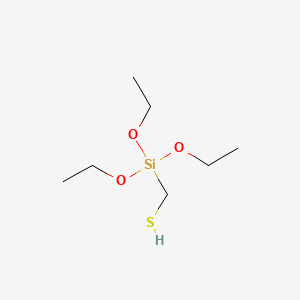
CAS · 60764-83-2
Product Overview
1-(Triethoxysilyl)methanethiol is a high-purity food-additives supplied for industrial and specialty chemical applications. Contact our team for specifications, packaging options and lead times.
Product Specifications
| Purity | 97% min |
|---|---|
| Appearance | Colorless transparent liquid |
| Color (APHA) | 20 max |
| Density (20°C) | 0.996 ~ 1.011 g/cm³ |
| Specific Gravity (nD) | 1.4492 ~ 1.4515 |
Applications
1-(Triethoxysilyl)methanethiol is a versatile organosilane compound widely used as a functional coupling agent, surface modifier, and precursor in material science and polymer chemistry. Its thiol (-SH) group allows it to chemically bind to metals, metal nanoparticles, and other thiophilic surfaces, making it valuable in the preparation of metal-functionalized surfaces, catalysts, and nanomaterials. The triethoxysilyl moiety enables covalent attachment to silica, glass, or other oxide surfaces through siloxane bond formation, which is particularly useful in the production of hybrid organic-inorganic materials, coatings, and surface-functionalized nanoparticles. It is also applied in the synthesis of self-assembled monolayers (SAMs) on silicon or glass substrates, enhancing surface properties such as adhesion, hydrophobicity, or reactivity. Additionally, it serves as an intermediate in the development of advanced polymers, cross-linked networks, and protective coatings where controlled surface functionality is required.
Benefits
1-(Triethoxysilyl)methanethiol provides multiple advantages in chemical and material design. Its bifunctional structure, combining a thiol group with a triethoxysilyl moiety, allows dual reactivity, enabling strong attachment to both organic and inorganic surfaces. This property improves the stability and durability of coatings, composite materials, and functionalized nanoparticles. The thiol group also facilitates further chemical modification, such as conjugation with metals, polymers, or bioactive molecules, expanding its utility in catalysis, biosensing, and nanotechnology applications. The compound enhances compatibility between organic polymers and inorganic substrates, improving mechanical strength, thermal stability, and chemical resistance of hybrid materials. Its ease of handling, moderate reactivity under standard laboratory conditions, and capacity to form covalent bonds on diverse surfaces make it highly versatile for research and industrial applications.
Conclusion
1-(Triethoxysilyl)methanethiol is an important organosilane that bridges the gap between organic chemistry and materials science. Its dual-functionality enables strong surface modification, chemical conjugation, and the creation of hybrid materials with enhanced stability and tailored properties. By supporting applications in nanotechnology, catalysis, coatings, and advanced polymer synthesis, it serves as a crucial intermediate for scientists and engineers aiming to design functionalized materials and surfaces with high performance and durability. Its versatility and effectiveness ensure its continued relevance in both research and industrial development.
Previous
Next