
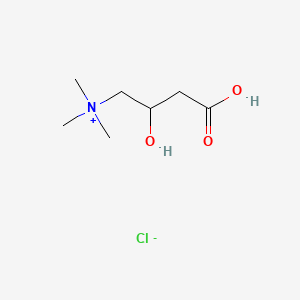
CAS · 461-05-2
Product Overview
DL-Carnitine hydrochloride is a synthetic form of carnitine, a quaternary ammonium compound involved in energy metabolism. It plays a crucial role in the transport of fatty acids into mitochondria, where they are oxidized for energy production. Unlike the biologically active L-carnitine, DL-carnitine is a racemic mixture that contains both D- and L-isomers.
Product Specifications
| Property | Specification |
|---|---|
| Grade | JPC 97 Standard |
| Appearance | White crystalline powder |
| Assay | 98.0% ~ 102.0% |
| Residue on Ignition | 0.20% max |
| pH | 2.3 - 2.6 |
| Loss on Drying | 1.00% max |
| Melting Point | 195.0 ~ 201.0°C |
| NH₄ (Ammonium) | 0.01% max |
| Arsenic (As) | 1 ppm max |
| Heavy Metals | 10 ppm max |
Applications
1. Pharmaceutical and Medical Applications
● Energy Metabolism Research:
Studied for its role in fatty acid oxidation and metabolic disorders.
● Potential in Neurological Research:
Investigated for its effects on brain function, memory, and neuroprotection.
● Treatment of Carnitine Deficiency:
Used in research and supplementation to address primary or secondary carnitine deficiencies.
2. Nutritional and Dietary Supplementation
● Sports and Energy Supplements:
L-carnitine is commonly used in athletic performance enhancers, though DL-carnitine is less preferred due to its lower bioactivity.
● Weight Management Products:
Studied for its role in fat metabolism and energy expenditure.
3. Biochemical Research and Industrial Use
● Metabolic Pathway Studies:
Used in laboratory research to study carnitine transport and mitochondrial function.
● Feed Additives for Livestock:
Sometimes included in animal nutrition for its potential benefits in metabolism and muscle function.
Benefits
1. Supports Fatty Acid Metabolism
● Plays a role in transporting long-chain fatty acids into mitochondria, promoting energy production.
2. Potential Neuroprotective Effects
● Studied for its impact on brain health, cognitive function, and neurodegenerative disorders.
3. Used in Research for Metabolic Disorders
● Helps in understanding and treating carnitine deficiencies and mitochondrial diseases.
Conclusion
DL-Carnitine hydrochloride丨461-05-2 is primarily used in pharmaceutical research, biochemical studies, and metabolic investigations. While L-carnitine is the biologically active form commonly used in supplements, DL-carnitine serves as a useful compound in scientific and industrial applications, particularly in energy metabolism and neurological research.
Previous
Next