
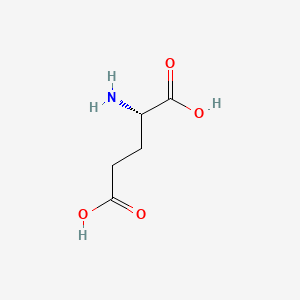
CAS · 56-86-0
Product Overview
L-Glutamic acid is a high-purity amino-acids supplied for industrial and specialty chemical applications. Contact our team for specifications, packaging options and lead times.
Product Specifications
| Grade | AJI92 |
|---|---|
| Appearance | White crystal or crystalline powder |
| Assay | 99.0% to 101% |
| pH | 3.0 to 3.5 |
| Loss on drying | 0.1% max |
| As₂O₃ | 1 ppm max |
| Residue on ignition (sulfated) | 0.1% max |
| Heavy metal (Pb) | 10 ppm max |
| Iron | 10 ppm max |
| Sulfate | 0.02% max |
| Ammonium | 0.02% max |
| Chloride | 0.02% max |
| Other amino acids | 0.5% max |
| Specific rotation [α]20/D (C=10 in 2N HCl) | +31.5 to +32.5° |
| State of solution | 98% min |
Applications
L-Glutamic acid is a naturally occurring non-essential amino acid widely used in the food, pharmaceutical, and biochemical industries. In the food sector, it is employed as a flavor enhancer and umami agent, commonly found in seasonings, snacks, soups, and sauces. In pharmaceuticals, L-glutamic acid serves as a precursor for the synthesis of neurotransmitters, such as gamma-aminobutyric acid (GABA), and is used in formulations supporting brain and metabolic health. It is also applied in biochemical research as a building block for peptides, protein synthesis studies, and enzymatic reaction analysis.
Benefits
The benefits of L-glutamic acid include its role in metabolism, neurotransmission, and protein synthesis. It supports brain function, cellular energy production, and nitrogen transport, contributing to overall health and physiological balance. In food applications, it enhances taste and palatability without adding excessive sodium. Its high purity, biocompatibility, and versatility make it valuable for both industrial and laboratory use, facilitating efficient production of derivatives, peptides, and nutritional supplements.
Conclusion
L-Glutamic acid is a multifunctional amino acid with important applications in food, pharmaceuticals, and biochemical research. Its nutritional, physiological, and functional properties make it essential for flavor enhancement, metabolic support, and molecular synthesis. By contributing to health, taste, and research efficiency, L-glutamic acid continues to be a critical compound across diverse industries.
Previous
L(+)-Ornithine Hydrochloride丨CAS 3184-13-2
Next