
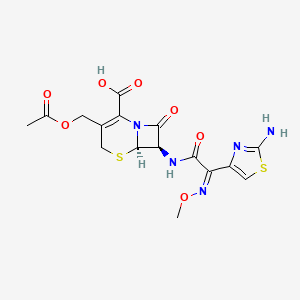
CAS · 63527-52-6
Product Overview
Cefotaxime is a high-purity antibiotics supplied for industrial and specialty chemical applications. Contact our team for specifications, packaging options and lead times.
Product Specifications
| Appearance: | White to off-white powder |
|---|---|
| Assay: | 98% min |
| Solubility (30mg/mL, 1M HCl): | Clear, colorless to faint yellow solution |
Applications
1. Antibacterial Agent in Clinical Medicine
Cefotaxime is widely used as a broad-spectrum intravenous antibiotic.
Effective against many Gram-positive and Gram-negative bacteria, including Staphylococcus aureus, Streptococcus pneumoniae, Escherichia coli, Klebsiella spp., Proteus spp., and Haemophilus influenzae.
Commonly prescribed for:
Respiratory tract infections
Urinary tract infections
Bacterial meningitis
Septicemia
Intra-abdominal infections
Gonorrhea
Preferred in severe infections due to its ability to penetrate the cerebrospinal fluid (CSF).
2. Veterinary Medicine
Used for treating infections in animals caused by susceptible bacteria.
3. Research and Development
Utilized in studies related to antimicrobial resistance and antibiotic mechanism of action.
Benefits
✅ Broad Spectrum and Potency
Highly effective against both Gram-negative and Gram-positive pathogens.
Resistant to many β-lactamases produced by bacteria, though not all.
✅ Good Tissue Penetration
Effective in reaching difficult sites of infection such as the central nervous system (CNS).
✅ Favorable Pharmacokinetics
Rapid onset of action with relatively short half-life, allowing dosing flexibility.
Eliminated primarily by the kidneys.
✅ Well-Tolerated
Generally safe and well-tolerated in adults and children.
Side effects are usually mild and include gastrointestinal disturbances, rash, and allergic reactions.
Conclusion
Cefotaxime (CAS 63527-52-6) is a powerful and reliable third-generation cephalosporin antibiotic widely used for treating serious bacterial infections. Its broad spectrum, ability to penetrate the CNS, and β-lactamase resistance make it invaluable in clinical settings, especially for life-threatening infections. Continuous monitoring of resistance patterns is essential to maintain its clinical effectiveness.
Previous
Next