CAS · 4207-56-1
Product Overview
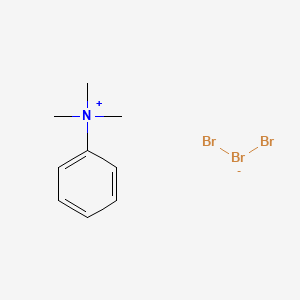
Phenyltrimethylammonium tribromide is a high-purity pharmaceutical-intermediates supplied for industrial and specialty chemical applications. Contact our team for specifications, packaging options and lead times.
Product Specifications
| Item | Specification |
|---|---|
| Appearance | Orange red solid |
| Assay (HNMR) | 97.0% min |
| Melting Point | 110–115 °C |
Applications
1. Organic Synthesis
Phenyltrimethylammonium tribromide丨CAS 4207-56-1 is used extensively for bromination of various organic substrates:
a. Aromatic Bromination
● Selective monobromination of electron-rich aromatic rings (e.g., anisole, phenols, anilines)
● Offers higher regioselectivity and yield than traditional methods
b. Allylic and Benzylic Bromination
● Converts methylene groups adjacent to double bonds or aromatic rings into bromomethyl derivatives
● Useful for synthesizing intermediates in pharmaceuticals and agrochemicals
c. Oxidative Transformations
● Acts as a mild oxidant in transformations such as:
Oxidation of sulfides to sulfoxides/sulfones
Conversion of alcohols to aldehydes or ketones in the presence of catalytic systems
d. Halogenation of Alkenes and Alkynes
● Can be used to dibrominate alkenes, yielding vicinal dibromides
● Useful in polymer chemistry and halogenated intermediate production
2. Pharmaceutical & Medicinal Chemistry
Phenyltrimethylammonium tribromide丨CAS 4207-56-1 is valuable for the late-stage functionalization of complex molecules, especially in drug discovery and natural product synthesis. It helps in:
● Introducing bromine atoms for further cross-coupling reactions (e.g., Suzuki, Heck, or Sonogashira)
● Modifying biologically active scaffolds to enhance activity or metabolic stability
3. Safer Alternative to Liquid Bromine
One of the biggest advantages of PTMATB is its function as a solid brominating agent, which addresses several issues with liquid bromine:
● No corrosive fumes
● Easier to weigh and handle
● Lower toxicity risks
● Improved shelf-life and storage stability
4. Green Chemistry and Academic Research
Because of its reduced hazard profile, PTMATB is favored in educational laboratories and research environments focusing on:
● Green synthetic methodologies
● Reaction mechanism studies
● Microscale experiments
Its use aligns with the principles of atom economy, minimization of hazardous reagents, and safer chemical design.
Benefits
√ Controlled Bromination
Provides precise bromine equivalents, reducing chances of over-bromination or by-products. This is especially important in fine chemical synthesis and drug development.
√ Safer Handling
As a stable, crystalline solid, it eliminates the handling difficulties and safety concerns of elemental bromine, which is:
● Volatile
● Corrosive
● Reactive
PTMATB allows for cleaner lab environments and simpler procedures.
√ Compatibility with Various Solvents
Dissolves in commonly used organic solvents (e.g., DMSO, DMF, acetonitrile), offering versatility across a wide range of synthetic protocols.
√ Mild Reaction Conditions
Most bromination reactions with PTMATB occur at:
● Room temperature or mild heating
● Neutral to slightly acidic pH This makes it suitable for temperature- and pH-sensitive substrates.
√ High Purity and Yields
When used correctly, reactions involving PTMATB generally offer:
● High conversion rates
● Minimal impurities
● Easy work-up and purification
Conclusion
Phenyltrimethylammonium tribromide丨CAS 4207-56-1 is a versatile, efficient, and safer alternative to traditional brominating agents. Its broad applicability in organic synthesis, particularly in aromatic bromination, benzylic halogenation, and oxidation reactions, makes it highly valuable in both industrial and academic chemistry.
Previous
Next
Conclusion
A concise summary and suitability assessment for this product is available on request. Contact our team to discuss whether it fits your process and quality requirements.