
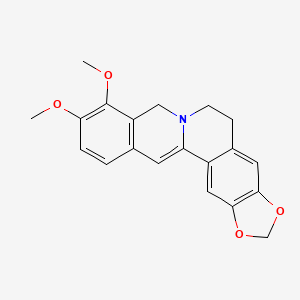
CAS · 483-15-8
Product Overview
Dihydroumbellatine is a high-purity pharmaceutical-intermediates supplied for industrial and specialty chemical applications. Contact our team for specifications, packaging options and lead times.
Product Specifications
| Appearance: | Yellow powder |
|---|---|
| Assay (Dry basis): | 97% min |
| Loss on drying: | 1.0% max |
| Bulk density: | 0.5 g/mL min |
| Heavy metals: | 20 ppm max |
| Pb: | 2 ppm max |
| As: | 2 ppm max |
| Cd: | 1 ppm max |
| Hg: | 1 ppm max |
| Total colony: | 10000 cfu/g max |
| Yeast and mold: | 1000 cfu/g max |
| E. coli: | 10 g negative |
| Salmonella: | 10 g negative |
| Staphylococcus aureus: | 10 g negative |
Applications
Dihydroumbellatine is an alkaloid compound derived from natural plant sources, known for its diverse applications in pharmaceutical research and biochemical studies. It serves as an important intermediate and reference material in the synthesis and study of bioactive alkaloids with potential therapeutic properties. Dihydroumbellatine has been explored for its possible roles in modulating neurological and cardiovascular functions due to its structural similarity to other bioactive benzylisoquinoline alkaloids. In pharmacological research, it is often investigated for its potential antioxidant, anti-inflammatory, and antitumor activities. Additionally, Dihydroumbellatine's complex heterocyclic structure makes it a valuable molecule for synthetic chemists studying reaction mechanisms, structure–activity relationships, and alkaloid biosynthesis pathways.
Benefits
The compound offers several scientific and industrial benefits due to its distinctive chemical architecture and potential biological activity. Its rigid framework and chiral centers allow for selective chemical modifications, enabling the synthesis of derivatives with enhanced pharmacological profiles. Dihydroumbellatine's stability and compatibility with a wide range of organic solvents facilitate its use in both synthetic and analytical applications. Moreover, its natural origin and structural resemblance to medicinal alkaloids make it a promising candidate for the development of new drug leads targeting neurological disorders, inflammation, and oxidative stress. Researchers also value it for its utility in elucidating biosynthetic pathways of plant-based alkaloids, contributing to the advancement of natural product chemistry and green synthesis.
Conclusion
Dihydroumbellatine is a valuable natural alkaloid with significant relevance in medicinal chemistry, pharmacological research, and synthetic organic chemistry. Its unique structure, biological potential, and versatility make it an important compound for the discovery and development of novel therapeutic agents. As studies on natural alkaloids continue to expand, Dihydroumbellatine stands out as a promising molecule for future pharmaceutical innovations and bioactive compound research.
Previous
Next