
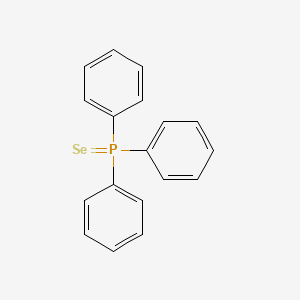
CAS · 3878-44-2
Product Overview
Triphenylphosphine selenide is a high-purity catalysts-auxiliary-agent supplied for industrial and specialty chemical applications. Contact our team for specifications, packaging options and lead times.
Product Specifications
| Appearance | White to off-white powder |
|---|---|
| Purity(HPLC) | 98.0% min |
Applications
Triphenylphosphine selenide is widely used as a reagent and intermediate in inorganic, organophosphorus, and organoselenium chemistry. It serves as a convenient selenium-transfer agent in the synthesis of selenides, diselenides, and other selenium-containing organic molecules. In coordination chemistry, it is used to prepare metal–selenide complexes and to study ligand behavior due to its well-defined P=Se functional group. In organic synthesis, it can convert alkyl or acyl halides into their corresponding selenide derivatives and participate in nucleophilic substitution and reduction reactions. It also acts as a useful precursor in the generation of selenolate species and serves as a reference compound for spectroscopic studies involving phosphorus–selenium bonding.
Benefits
The benefits of triphenylphosphine selenide include its stability, well-defined reactivity, and ease of handling compared with more reactive or hazardous selenium reagents. Its crystalline, non-volatile nature makes it safer to store and transport than elemental selenium or volatile selenium compounds. The compound offers reliable selenium incorporation without requiring harsh conditions, making it suitable for controlled synthesis of selenium-containing molecules. The strong P=Se bond provides predictable spectroscopic characteristics, making it valuable as a calibration or model compound in NMR and IR studies. Additionally, its compatibility with various reaction environments enhances its utility in both academic and industrial chemistry.
Conclusion
Triphenylphosphine selenide is a valuable reagent for selenium transfer, organoselenium synthesis, and coordination chemistry research. Its stability, predictable reactivity, and utility as a spectroscopic reference make it a versatile tool in laboratories working with selenium-containing compounds. With reliable performance and broad applicability, it continues to play an important role in synthetic, mechanistic, and materials-oriented chemical research.
Previous
N,N-Bis(3-aminopropyl)dodecylamine丨CAS 2372-82-9
Next