CAS · 617-86-7
Product Overview
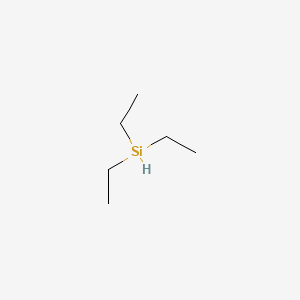
Triethylsilane is a high-purity silicon-compounds supplied for industrial and specialty chemical applications. Contact our team for specifications, packaging options and lead times.
Product Specifications
| Property | Specification |
|---|---|
| Appearance | Colorless liquid |
| Purity | 99% min |
Applications
1. Organic Synthesis
Triethylsilane is extensively used in synthetic organic chemistry as a hydride source. It participates in a variety of reactions including:
● Reductive deprotection: It is particularly useful for the removal of protecting groups, such as benzyl or benzyloxycarbonyl (Cbz), especially in the presence of a Lewis acid catalyst like trifluoroacetic acid (TFA) or boron trifluoride (BF₃).
● Reductive amination: Facilitates the formation of amines from imines or aldehydes/ketones and amines.
● Hydrosilylation: Adds across unsaturated bonds like alkenes and alkynes in the presence of transition-metal catalysts (e.g., platinum, rhodium), enabling the formation of organosilicon compounds.
2. Pharmaceutical and Fine Chemical Manufacturing
In pharmaceutical synthesis, Triethylsilane plays a role in selective reductions and is often used to prepare complex drug molecules under mild and controlled conditions, minimizing byproducts and improving reaction yields.
● Example: Used in the selective reduction of intermediate compounds in the production of APIs (Active Pharmaceutical Ingredients).
● Enables stereoselective synthesis, which is critical for drug efficacy and regulatory approval.
3. Polymer and Material Science
Triethylsilane丨CAS 617-86-7 finds use in modifying surfaces and as a precursor in the synthesis of functionalized silanes for specialty polymers, coatings, or adhesives. It is valued for introducing hydrophobic or flexible silane chains into polymeric structures.
● Used in cross-linking agents or additives that enhance the thermal or mechanical properties of silicone-based materials.
4. Catalysis and Ligand Design
Triethylsilane is used in the reduction of metal complexes and in the regeneration of catalysts in homogeneous catalysis. It can donate hydride ions (H⁻) under catalytic conditions to regenerate active species, making it a valuable tool in reaction optimization.
Benefits
1. Mild and Selective Reducing Agent
Compared to conventional reducing agents like lithium aluminum hydride or sodium borohydride, Triethylsilane offers a gentler alternative, particularly for reactions sensitive to harsh conditions. It is especially effective for:
● Avoiding over-reduction
● Maintaining the integrity of sensitive functional groups
● Working at room temperature or under mild heating
2. Compatibility with Catalysts
Triethylsilane is compatible with a wide range of Lewis and Brønsted acids, as well as transition-metal catalysts, making it versatile in numerous reaction conditions and catalyzed transformations.
3. Improved Yields and Product Purity
Its selectivity in hydride transfer often results in high yields and clean reactions, with fewer side products, which is important in fine chemical and pharmaceutical manufacturing where purity and cost-efficiency are key.
4. Ease of Handling
As a liquid reagent, Triethylsilane丨CAS 617-86-7 is easier to store and dispense compared to gaseous or highly reactive reducing agents. It has relatively low volatility and is more manageable in both lab and industrial settings.
Previous
N,O-Bis(trimethylsilyl)acetamide丨CAS 10416-59-8
Next
2,4,6,8-Tetravinyl-2,4,6,8-tetramethylcyclotetrasiloxane丨CAS 2554-06-5
Conclusion
A concise summary and suitability assessment for this product is available on request. Contact our team to discuss whether it fits your process and quality requirements.