
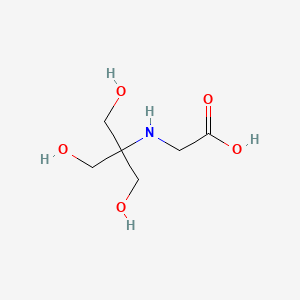
CAS · 5704-04-1
Product Overview
Tricine is a high-purity biological-buffer supplied for industrial and specialty chemical applications. Contact our team for specifications, packaging options and lead times.
Product Specifications
| Item | Specification |
|---|---|
| Appearance | White crystal powder |
| Assay | 99% min |
| Loss on drying | 1.0% max |
| Solubility (0.1M water solution) | Clear, colorless |
| PH (1% water solution) | 4 to 6 |
| Heavy metal (Pb) | 5 ppm max |
| Ultraviolet absorbance (260nm, 0.1M aq.) | 0.04 max |
| Ultraviolet absorbance (280nm, 0.1M aq.) | 0.02 max |
Applications
1. Electrophoresis Buffer
● Tricine is a popular buffering agent in SDS-PAGE, particularly for low molecular weight proteins.
In Tricine-SDS-PAGE, it replaces glycine in the running buffer to improve the resolution of small peptides and proteins.
Offers better band separation below 10 kDa compared to traditional Laemmli buffer systems.
2. Biochemical and Molecular Biology Buffers
● Used in enzyme kinetics, protein purification, and immunoassays where maintaining a stable pH is critical.
● Common buffer in nucleic acid hybridization and cell culture media when a neutral to slightly basic pH is required.
3. Metal Ion Chelation and Stability
● Tricine丨CAS 5704-04-1 exhibits mild chelating properties with metal ions such as Cu²⁺, Fe²⁺/Fe³⁺, and Zn²⁺, without interfering with biochemical reactions.
Useful in studying metalloproteins or enzyme cofactors
Minimizes metal-catalyzed oxidative damage in sensitive biochemical systems
4. Mitochondrial and Cell Physiology Studies
● Tricine is used in mitochondrial isolation and respiration assays, as it stabilizes pH without altering redox potential or affecting oxygen solubility.
● Compatible with membrane potential assays and studies on oxidative phosphorylation.
5. Fluorescence and Spectroscopy
● Often used as a buffer in fluorescence-based studies, including fluorescent dye binding assays and fluorescent protein detection, because of its low UV absorbance.
● Suitable for use in optical experiments where background signal must be minimized.
Benefits
√ Excellent Buffering Capacity
● Maintains stable pH in the neutral to slightly alkaline range (pH 7.4–8.8), making it ideal for physiological and biochemical systems.
√ Improved Electrophoretic Resolution
● In SDS-PAGE, Tricine enables superior separation of small proteins and peptides, especially below 10 kDa.
√ Low Metal Ion Interaction
● Tricine interacts weakly with divalent cations, helping to preserve enzymatic activity and avoid unwanted chelation effects.
√ Low UV Absorbance
● Minimal interference in UV/Vis and fluorescence assays, allowing accurate spectroscopic measurements.
√ Non-toxic and Biocompatible
● Considered non-cytotoxic at working concentrations and is compatible with cell culture, making it suitable for live-cell experiments.
Conclusion
Tricine丨CAS 5704-04-1 is a versatile, highly effective buffering agent widely used in biochemistry, molecular biology, and electrophoresis. Its low reactivity with metal ions, excellent pH stability, and ability to resolve small proteins make it a preferred choice in protein analysis, enzyme studies, and cellular assays. Whether you're conducting sensitive spectrophotometric analyses or running protein gels, Tricine provides reliable performance and minimal interference.
Previous
Next
Conclusion
A concise summary and suitability assessment for this product is available on request. Contact our team to discuss whether it fits your process and quality requirements.