
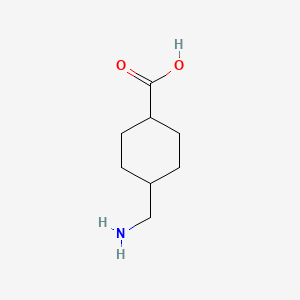
CAS · 1197-18-8
Product Overview
Tranexamic acid is a high-purity a-api supplied for industrial and specialty chemical applications. Contact our team for specifications, packaging options and lead times.
Product Specifications
| Grade | CP2015 |
|---|---|
| Appearance | White crystalline powder, odorless |
| Assay | 99% min |
| Solubility | Freely soluble in water; practically insoluble in acetone, ethanol, trichloromethane, and ether |
| Identification | Chemical reaction positive; IR conforms |
| pH | 7.0~8.0 |
| Chlorides | 140 ppm max |
| Sulfate (SO4) | 400 ppm max |
| Impurity A | 0.1% max |
| Impurity B | 0.1% max |
| Impurity C | 0.2% max |
| Any other impurity | 0.1% max |
| Total impurities | 0.5% max |
| Loss on drying | 0.5% max |
| Residue on ignition | 0.1% max |
| Heavy metals | 10 ppm max |
| Desicchlora | Both liquids should be clear |
| Carbonization test | Should not be deeper than the reference solution |
| Microbial limit | Number of aerobic bacteria: 1000 cfu/g max Number of mold and yeast: 100 cfu/g max E.coli: Not detectable |
Applications
Tranexamic acid is primarily used in medical and pharmaceutical applications as a hemostatic agent to reduce or prevent excessive bleeding. It is commonly applied in the treatment and prevention of hemorrhage associated with surgery, trauma, heavy menstrual bleeding, and certain hereditary bleeding disorders. Beyond systemic administration, it is also formulated in topical or oral products for cosmetic and dermatological purposes, particularly in skin-lightening treatments and the reduction of hyperpigmentation. In research and development, tranexamic acid is used to study antifibrinolytic mechanisms, coagulation pathways, and the design of novel therapeutics targeting excessive fibrinolysis or related vascular conditions.
Benefits
The benefits of tranexamic acid are derived from its potent antifibrinolytic properties, which help stabilize blood clots by inhibiting the activation of plasminogen to plasmin. This reduces the risk of excessive bleeding and supports better clinical outcomes in surgical and trauma care. Its versatility allows for both systemic and topical administration, providing flexibility for different therapeutic needs. The compound exhibits good safety and tolerability when used at recommended doses, and its efficacy in controlling bleeding has been well-documented across multiple medical contexts. Additionally, its use in dermatological formulations provides a non-invasive approach to managing pigmentation disorders with minimal side effects.
Conclusion
Tranexamic acid is a widely used compound with significant applications in medicine and dermatology. Its ability to control bleeding and influence pigmentation processes, combined with benefits such as efficacy, safety, and versatile administration, makes it a valuable tool in both therapeutic and cosmetic contexts. The compound continues to support improved clinical and aesthetic outcomes while serving as an important subject in research on coagulation and skin health.
Previous
Next