
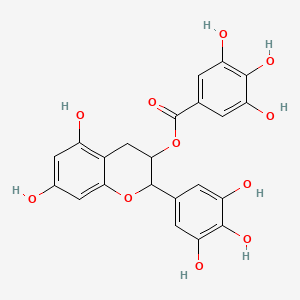
CAS · 84650-60-2
Product Overview
Tea polyphenol is a high-purity food-additives supplied for industrial and specialty chemical applications. Contact our team for specifications, packaging options and lead times.
Product Specifications
| Appearance: | Buff, sandy or dark brown powder |
|---|---|
| Tea polyphenols (UV): | 98.0% min |
| Tea catechins (HPLC): | 75.0% min |
| EGCG (HPLC): | 40.0% min |
| GCG (HPLC): | 5.0% max |
| Caffeine (HPLC): | 2.0% max |
| Odor: | Characteristic |
| Sieve Analysis: | 100% pass 80 mesh |
| Loss on Drying: | 5.0% max |
| Residue On Ignition: | 2.0% max |
| Heavy Metals: | 10 ppm max |
| Arsenic (As): | 2.0 mg/kg max |
| Total Plate Count: | 1000 cfu/g max |
| Yeast & Mold: | 100 cfu/g max |
| E. Coli: | Negative |
Applications
Tea polyphenols are extensively used in nutraceuticals and dietary supplements for promoting general health, supporting cardiovascular function, and providing antioxidant benefits. In pharmaceuticals, they are employed as active ingredients in formulations aimed at reducing oxidative stress, supporting liver health, and offering anti-inflammatory effects. In the cosmetic and personal care industry, tea polyphenols are incorporated into creams, lotions, serums, and masks for their anti-aging, skin-soothing, and UV-protective properties. They are also used in food and beverage applications as natural preservatives and antioxidants, helping to extend shelf life and improve product stability. Additionally, tea polyphenols are applied in research to study cellular protection mechanisms, enzyme modulation, and metabolic effects in oxidative stress and inflammation models.
Benefits
The benefits of tea polyphenols include their strong antioxidant, anti-inflammatory, and antimicrobial activities. They help neutralize free radicals, reducing oxidative damage to cells and tissues, which contributes to anti-aging and protective health effects. Their anti-inflammatory properties support skin health and systemic wellness, while antimicrobial effects can aid in preserving foods and cosmetic products. Tea polyphenols also promote cardiovascular and metabolic health by modulating lipid profiles, glucose levels, and vascular function. In topical applications, they improve skin elasticity, reduce fine lines, and protect against UV-induced damage. Moreover, they are generally biocompatible, safe, and derived from renewable natural sources, making them suitable for a wide range of applications without adverse effects.
Conclusion
In summary, tea polyphenols are natural bioactive compounds with broad applications in nutraceuticals, pharmaceuticals, cosmetics, and food products. Their antioxidant, anti-inflammatory, and antimicrobial properties make them valuable for promoting health, enhancing product stability, and improving skin care formulations. With safety, efficacy, and versatility, tea polyphenols continue to be an essential ingredient in functional foods, therapeutic formulations, and advanced cosmetic products.
Previous
Calcium Citrate Malate丨CAS 142606-53-9
Next