CAS · 121-57-3
Product Overview
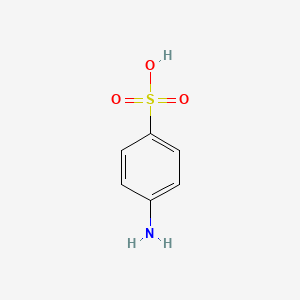
Sulfanilic acid is a high-purity pharmaceutical-intermediates supplied for industrial and specialty chemical applications. Contact our team for specifications, packaging options and lead times.
Product Specifications
| Appearance: | White powder |
|---|---|
| Assay: | 99% min |
| Water insoluble: | 0.1% max |
| Aniline: | 0.02% max |
| Water: | 0.5% max |
Applications
1. Dye and Pigment Industry
A. Precursor for Azo Dyes
Sulfanilic acid丨CAS 121-57-3 is a key intermediate in the synthesis of azo dyes-compounds used to dye:
● Textiles
● Leather
● Paper
The amine group undergoes diazotization to form diazonium salts, which are then coupled with aromatic compounds to form colorful azo dyes such as:
● Methyl orange
● Congo red
● Acid orange 7
B. Brightening Agents
Used to produce optical brighteners that enhance fabric brightness by converting UV light to visible light.
2. Analytical Chemistry
A. Griess Reagent Component
Sulfanilic acid is a core component of the Griess reagent, widely used in detecting nitrite ions in:
● Environmental water samples
● Biological fluids
● Food testing
The Griess test involves diazotization of sulfanilic acid and reaction with N-(1-naphthyl)ethylenediamine, producing a pink azo dye for colorimetric detection.
B. Calibration Standard
Due to its stable properties, sulfanilic acid is used as a primary standard in the calibration of spectrophotometers and other instruments.
3. Pharmaceutical Industry
Although not typically used directly as a drug, sulfanilic acid is a building block in the synthesis of sulfa drugs (sulfonamides), which have antibacterial properties.
4. Electrochemical and Industrial Applications
A. Corrosion Inhibitors
In some formulations, sulfanilic acid derivatives are added to metal protection systems as corrosion inhibitors due to their ability to chelate metal ions and form protective films.
B. Polymers and Coatings
It is used as a monomer or additive in the production of conductive polymers, resins, and plasticizers, especially when sulfonic groups are needed for ionic conductivity.
5. Environmental Applications
Sulfanilic acid丨CAS 121-57-3 plays a role in wastewater treatment studies and photocatalysis research as a model pollutant for evaluating:
● Photodegradation kinetics
● Adsorption efficiency of catalysts or membranes
Benefits
√ Versatile Intermediate
● Forms a wide variety of azo dyes, sulfonamide drugs, and functionalized chemicals
√ Water Soluble and Chemically Stable
● Ideal for aqueous formulations and reliable performance in lab tests
√ Critical Reagent for Nitrite Detection
● Widely used in clinical, environmental, and food analysis
√ Cost-Effective and Readily Available
● Commonly produced at industrial scale, making it affordable and widely accessible
√ Non-toxic for Many Applications
● Considered relatively safe in handling when used properly, especially in dye and analytical chemistry
Conclusion
Sulfanilic acid丨CAS 121-57-3 is a foundational chemical in dye manufacturing, environmental testing, and organic synthesis. Its unique combination of amine and sulfonic acid groups makes it highly reactive and adaptable across various industries. As both a precursor to azo dyes and a key analytical reagent, sulfanilic acid continues to play a pivotal role in chemical processing, research, and environmental monitoring.
Previous
Fmoc-O-tert-Butyl-L-serine丨CAS 71989-33-8
Next
Conclusion
A concise summary and suitability assessment for this product is available on request. Contact our team to discuss whether it fits your process and quality requirements.