
CAS · 96-09-3
Product Overview
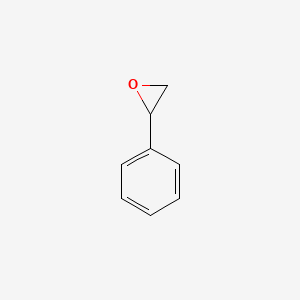
Styrene oxide丨CAS 96-09-3, also known as phenylethylene oxide or epoxy styrene, is an organic epoxide featuring a three-membered oxirane (epoxide) ring attached to a styrene backbone. As a reactive intermediate, it is widely used in chemical synthesis, polymer production, and biochemical research. Its epoxide group enables it to participate in a wide range of nucleophilic and electrophilic reactions, while its phenyl group contributes to stability and functionality.
Product Specifications
| Appearance | Colorless and clear liquid |
|---|---|
| Purity (GC) | 98.5% min |
| Color (Pt-Co) | 20 max |
| Water (K.E) | 0.2% max |
| Density (20°C), g/cm3 | 1.050–1.054 |
| Bromine value (Br g/100g) | 0.07 max |
Applications
1. Intermediate in Organic Synthesis
Styrene oxide丨CAS 96-09-3 is a key building block in organic and pharmaceutical chemistry. Its reactive epoxide ring undergoes nucleophilic attack to form a wide range of products:
● Amino alcohols, diols, and ethers: Reaction with water, alcohols, amines, or thiols opens the ring to form useful intermediates.
● Chiral synthesis: Enantiomerically pure styrene oxide is used to prepare optically active compounds in asymmetric synthesis.
● Pharmaceutical intermediates: It plays a role in the synthesis of β-blockers, antihistamines, and other drug candidates.
2. Monomer for Polymerization
Styrene oxide can be polymerized to form poly(styrene oxide) and copolymers with various properties:
● Epoxy resins: Acts as a reactive monomer or cross-linker in epoxy-based resins, which are used in adhesives, coatings, and electrical encapsulation.
● Polyether synthesis: Polymerization yields flexible polyethers used in elastomers, surfactants, and hydrogels.
● Graft copolymers: Incorporated into more complex polymers to modify hydrophobicity or mechanical properties.
3. Biochemical and Toxicological Studies
Styrene oxide丨CAS 96-09-3 is a metabolite of styrene in humans and animals, produced via cytochrome P450 oxidation in the liver. Therefore, it serves as a model compound in:
● Carcinogenicity and genotoxicity studies: Due to its ability to form DNA adducts and cause mutagenesis, it is studied in the context of occupational exposure to styrene.
● Metabolic pathway analysis: Used in in vitro and in vivo research to understand metabolic fate, detoxification (e.g., glutathione conjugation), and enzyme involvement.
4. Cross-linking Agent
In polymer and surface chemistry, styrene oxide is used as a cross-linking agent to improve thermal and mechanical properties of resins and coatings.
● Surface modification: Used in grafting reactions for modifying polymer surfaces or introducing functional groups.
5. Surfactants and Detergents
Reactions of styrene oxide with alcohols and fatty acids can produce nonionic surfactants and emulsifiers, especially in formulations for cosmetics and cleaners.
Benefits
1. High Reactivity
The strained epoxide ring in styrene oxide makes it highly reactive towards a wide range of nucleophiles, enabling the formation of various derivatives under mild conditions.
2. Versatility in Synthesis
It serves as a valuable synthon in organic chemistry, allowing for diverse reactions such as:
● Ring-opening with nucleophiles (alcohols, amines, thiols)
● Rearrangement reactions
● Catalytic asymmetric transformations
3. Chiral Applications
Both racemic and optically pure forms are available, making it suitable for use in enantioselective synthesis and development of chiral drugs or ligands.
4. Integration into Polymers
Styrene oxide-based monomers improve mechanical strength, flexibility, and chemical resistance in polymeric systems.
5. Biomedical Relevance
As a metabolite of styrene, it provides key insight into toxicological pathways, enabling risk assessment for styrene exposure in occupational and environmental health.
Conclusion
A concise summary and suitability assessment for this product is available on request. Contact our team to discuss whether it fits your process and quality requirements.